
Choosing the right SEO agency for your small business can shape your blog or business for a year or more. Choose well, and you gain steady search visibility, more qualified inquiries, and time back in your week. Choose poorly, and you lose budget, momentum, and trust.
Search results now include AI-generated answers in more places, so the questions you ask an agency in 2026 should go beyond traditional rankings. This Inspire To Thrive guide gives you a practical way to shortlist, vet, and select a partner, with pricing context, red flags, and simple contract safeguards.
Estimated reading time: 8 minutes
Table of Contents
Start With Outcomes and Constraints
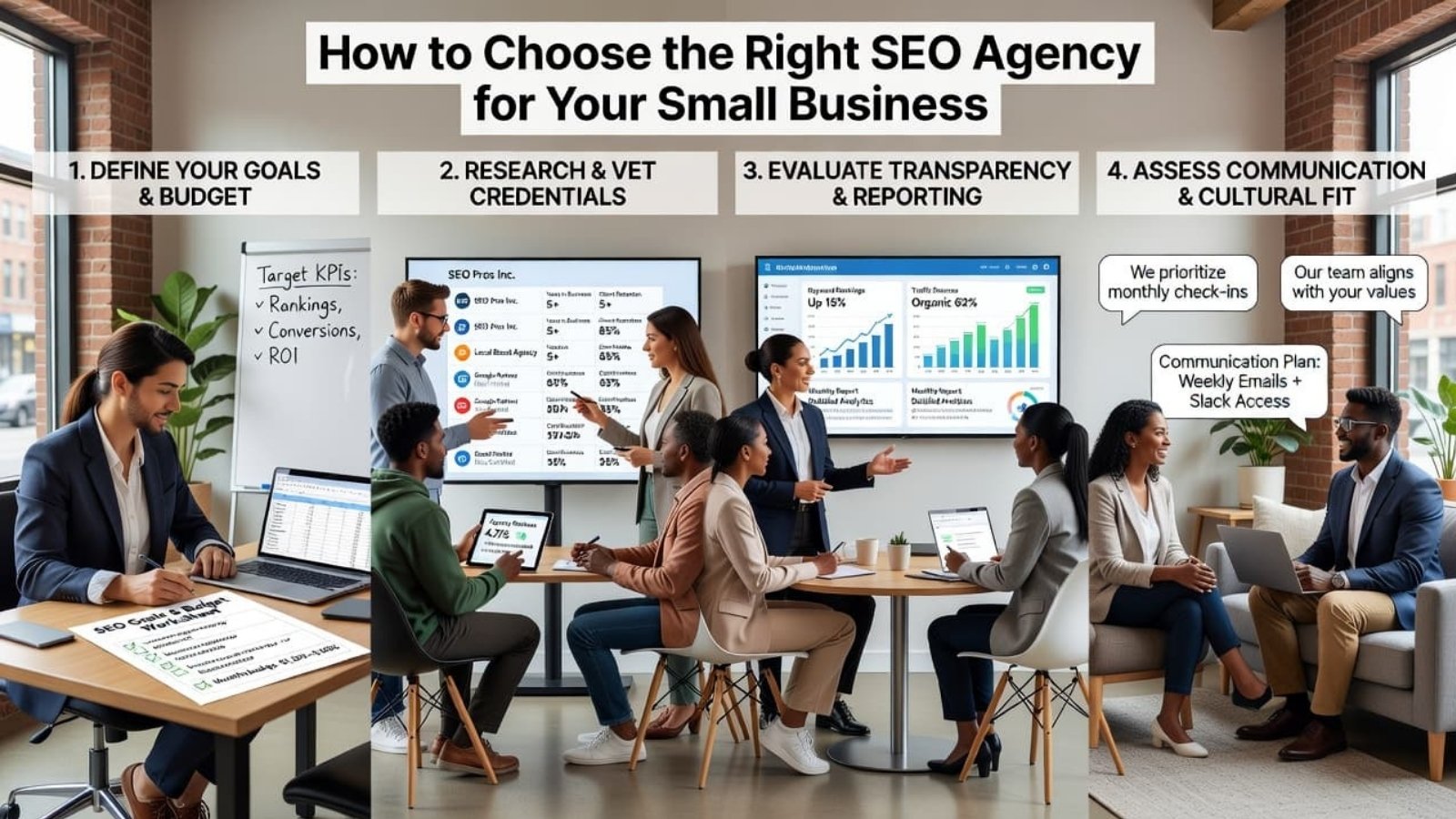
Before you talk to anyone, get specific about what a win looks like. Pick one or two priority outcomes rather than a vague goal like “more traffic.” Common examples include qualified leads, online sales, or better local visibility in a defined service area.
Next, name the channels that matter for your business model. A local service business usually cares about map results and local landing pages. An online store relies more on product and category pages. A B2B firm often needs content that supports longer buying cycles.
Then set two constraints in writing: your monthly budget ceiling and your internal bandwidth. SEO is not fully hands-off. Someone on your side may need to approve content, provide photos, review technical changes, or answer customer questions.
When you shortlist agencies, favor teams with real experience in your business model, whether that is local services, ecommerce, or B2B. Fit matters more than a polished pitch.
Build a Practical Shortlist To Choose The Right SEO Agency
Good candidates often come from referrals, credible directories, and an agency’s own published work. Be cautious with vendors who arrive through unsolicited email. Google cautions against unsolicited SEO pitches, and that advice is a useful filter on its own.
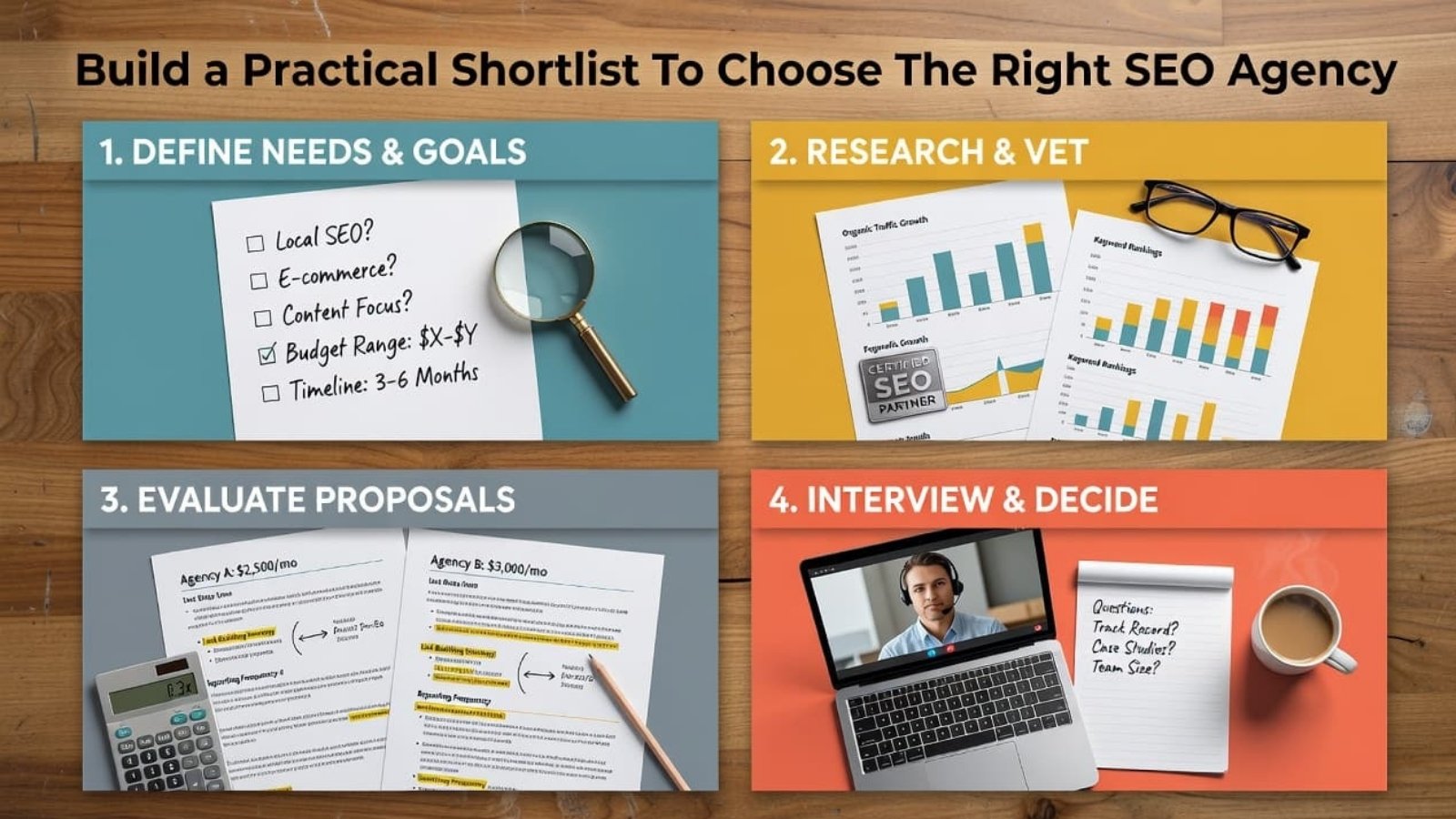
As you browse, look for signs of transparency. Useful service pages explain the process, not just the outcome. Strong case studies show a starting point, the work completed, and the result. Sample reports should be clear enough for a non-specialist to understand.
If an agency promotes “AI SEO” or answer-engine optimization, check whether its advice lines up with official guidance rather than vague claims about hidden tactics.
For market context, Clutch’s 2026 reporting found that 52% of small businesses and 47% of enterprises invest in SEO, so you are not alone in comparing providers.
First Filter: Red Flags and Deal-Breakers
Some claims should end a conversation quickly. Google is direct on this point: no reputable SEO can guarantee a number one ranking, and you should be wary of anyone who claims a special relationship with Google or priority submission access. Treat those promises as an automatic no.
Watch for these other warning signs:
- Secrecy about the tactics they will use on your site.
- Pressure to buy links or join link schemes.
- Offers to generate reviews for you. The FTC warns that fake reviews can be deceptive under the FTC Act, which can put your business at risk.
- Requests for more account access than the work requires.
Keep access tight during evaluation. For an audit, read-only Search Console access is usually enough. A trustworthy agency will understand why you start there and will not push for unnecessary permissions.
Pricing Models and What They Usually Buy
SEO is usually sold in three ways: monthly retainers, fixed-scope projects, and hourly work. According to Clutch’s 2026 guide, monthly retainers remain the standard structure. A retainer may include ongoing technical fixes, content planning, local SEO, link earning, and reporting. A project fits a defined job, such as a one-time audit or site migration. Hourly work suits small, occasional tasks.
For directional benchmarks, the same guide shows most SEO projects cost under $10,000, and hourly rates commonly fall between $100 and $149. Treat these as guardrails, not quotes. Real pricing depends on your market, competition, site conditions, and scope.
As one example, Firstpage NewZealand offers a small-business SEO range of $300 to $1,150 per month. It is also worth noting that nearly one in five companies in the same survey reported a negative experience with an SEO firm before finding the right fit.
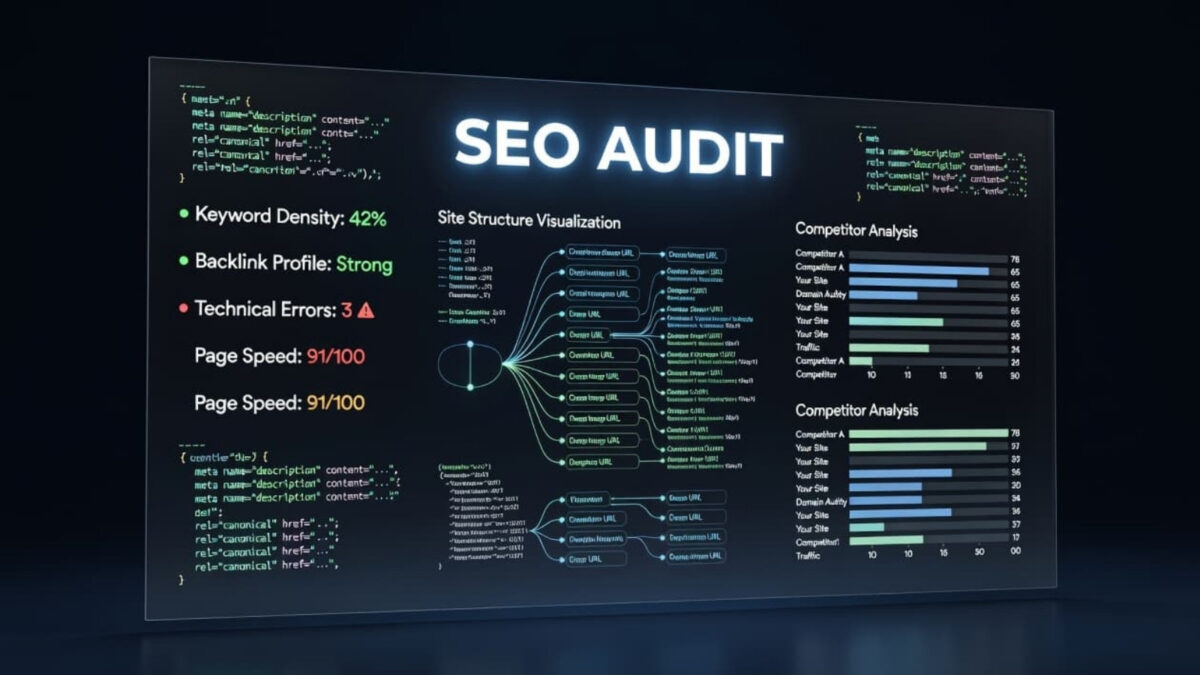
What to Expect in an Initial Audit and Plan
A serious agency should establish a baseline before discussing results. Ask to see where you stand today using sources such as Search Console, GA4, and, for local businesses, your Google Business Profile.
A useful audit and plan usually includes:
- A baseline of current traffic, visibility, and conversions.
- Technical findings ranked by likely impact.
- Opportunity sizing, so you know where the upside may be.
- Honest risks, including anything that could delay results.
- A 90-day plan with named priorities.
Because search increasingly includes AI-generated answers, the plan should also explain how the agency will track AI-search visibility where reliable data is available. Ask what they can measure, what they cannot measure, and how that information will affect content decisions.
Questions to Ask on Discovery Calls
A short list of pointed questions tells you more than a pitch deck. Bring these to every call:
- Do you have experience in my industry and service area?
- Which success metrics do you track beyond rankings?
- Given my stage, what would you choose not to do yet?
- Who actually works on my account day-to-day?
- How often will we meet, and in what format?
- Can I see a real, anonymized sample report?
- What is your content process, from idea to publish?
- What standards do you follow for acquiring links?
- How does your AI-search approach align with Google’s documentation?
- How do you handle account access and change control?
Listen for specifics. Vague, confident answers are often a softer version of the red flags above.
Reporting and Time to Results To Choose The Right SEO Agency
Reporting is where accountability lives. At a minimum, a monthly report should show traffic alongside leads or calls, outcomes by important pages, local pack visibility for local businesses, AI-search visibility where available, work completed that month, and priorities for the next month. If a report only shows rankings, ask for more.
Set realistic expectations on timing. As one provider’s estimate, Search Engine Land suggests early improvements may appear in three to six months, with more significant results in six to twelve months. Use that as a planning range, not a promise. Competitive markets take longer, and no honest agency will commit to an exact date.
👉 Search tools and reporting features also change over time. Good agencies explain those changes in plain language and adjust reports so you still understand what is happening and why.
Compare Proposals Apples to Apples
Once you have two or three proposals, score them against the same criteria so price does not win by default. A simple scorecard works well:
- Fit: relevant experience in your use case and industry.
- Scope depth: what is actually included each month.
- Ownership: confirmation that your assets and accounts stay yours.
- Evidence: baselines, examples, and a clear methodology.
- Communication: meeting schedule and reporting quality.
- Risk: link and AI-search claims that match accepted guidance.
- Total cost of ownership: content, development, or approval work your team must fund or complete.
That last row is easy to miss. A lower retainer that requires heavy work from your team may cost more than a higher one that includes it.
Local Versus Remote Partners
You do not always need an agency down the street. A local partner earns its keep when physical presence matters, such as multi-location field work, local citation checks, or photography.
Remote partners can work well for content strategy, technical fixes, and reporting, which happen inside your accounts regardless of location. A broader online presence strategy can also help you judge whether an agency’s blogs and capabilities match your goals.
If you are comparing providers, it can help to scan how Firstpage describes its SEO process, cost and timeline FAQs, and reporting cadence. Use those public details as a template for the questions you ask everyone on your shortlist.
👉 Treat any pricing or timeframe you see there as that provider’s example, not a benchmark for your market.
Making the Final Call To Choose The Right SEO Agency
Keep the decision simple. Define your goals first, screen out red flags, and confirm fit through pointed questions, a real audit, and honest reporting. Where possible, start with a short initial term or a small trial project instead of a long lock-in. That gives you a lower-risk way to see how the agency communicates and delivers before you commit further.
The right partner will welcome that pace because they are confident in the work.
Have you hired an SEO agency to help with your blog or small business website? I’d love to hear about it in the comments below. 👇

- Best Instagram Story Viewers in 2026: Free Tools + Honest Limits - October 22, 2026
- Which Instagram Monitoring App Wins? EyeZy vs Peekviewer - October 20, 2026
- How to Use Social Media for the Best Black Friday Deals of 2026 - October 19, 2026
Enjoy this content? Help me show up more often in Google by adding Inspire To Thrive as a Preferred Source:



Unsolicited pitches are a no-no.
Strangers pitch strangers for a good reason. No credible agency builds a thriving SEO business by chasing strangers. Skilled SEO folks build referrals through their genuine service and rock-solid relationships established with happy clients.
Keen point too on being specific. Set clear goals in mind to find the right candidates for the job. Everything begins there.
I recall hiring an SEO agency as a clueless newbie 18 years ago. I did no due diligence. I just tossed money at the individuals. It did not work out well but that was my fault for not following sound tips like yours.
Thanks so much for sharing this Ryan here — especially the part about your own experience 18 years ago. That hits home.
You’re right: the agencies that actually deliver results almost never cold-pitch strangers. The good ones are usually busy with referrals from clients who are happy enough to recommend them. When someone does reach out out of the blue with a generic pitch, that’s usually a red flag worth paying attention to.
And yes — being clear on your goals first makes all the difference.
I’ve seen too many people (myself included, early on) hand over money without really knowing what “success” was supposed to look like. It’s an expensive way to learn.
Appreciate you taking the time to add your perspective. Have a great day!