Passive link building is one of the smartest, most sustainable ways for niche blogs and small websites to grow authority and traffic over time, without spending hours on cold outreach emails every week.
Instead of chasing links, you create genuinely useful content, tools, or resources that other bloggers, writers, and site owners naturally want to reference and link to. For solopreneurs and niche site owners with limited time and budgets, this approach is especially powerful because one well-crafted piece can continue earning backlinks and visitors for months or even years.
In this Inspire To Thrive guide, you’ll learn exactly what passive link building is, how it differs from active outreach, a step-by-step process to create linkable assets, real examples that work for small sites, how to measure results, and how to combine it with light promotion for better outcomes.
No fluff; just practical strategies you can start using today.
Estimated reading time: 10 minutes
Table of Contents
Key Passive Link Building Points
The most actionable improvements are:
- Passive link building earns backlinks naturally when others reference your useful content, no outreach required.
- It’s especially effective for niche blogs and solopreneurs because one strong asset can attract links for years.
- Focus on creating linkable assets like guides, checklists, original research, calculators, and templates.
- Results take time (usually 3–6+ months), but the links are often more relevant and sustainable.
- Passive works best when combined with light promotion and smart on-page SEO.
- Quality (relevance + authority) matters more than how the link was earned.
- Track referring domains, referral traffic, and rankings to measure real progress.
What Is Passive Link Building?
Passive link building is the process of earning backlinks organically, hat is, getting other websites to link to your site without requesting or negotiating.
This happens when the content on your site is genuinely helpful, trustworthy, and relevant, and actually helps enrich their posts.
This is in contrast to active link building, where you reach out to other sites and ask to guest post on their sites, with specific topic suggestions and your links. Active link building also includes link exchanges, reclaims, and outreach campaigns.

Passive Link Building vs. Active Link Building for Niche Websites
Smaller websites tend to focus on active link building. They think that because their site is too specialized, only a few sites would link to it.
After all, passive link building is a more abstract process. Since you’re essentially trying to enrich your own blog and hoping that the algorithms and other sites notice, it can feel like a shot in the dark.
Smaller blogs fear this uncertainty, which is why they focus on active link building. This often leads to a self-fulfilling prophecy: by prioritizing posting on other blogs, smaller sites can end up neglecting their own, leaving them too thin on content.
Then, little to no passive link building ever occurs.
You must realize that uncertainty is a natural part of passive link building, and that the tradeoff is long-term upside.
Passive Link Building vs Active Link Building
| Factor | Passive Link Building | Active Link Building |
|---|---|---|
| How links are earned | Others discover and naturally reference your content | You reach out to site owners (outreach, guest posts, etc.) |
| Speed | Slower at the start, compounds over time | Can produce links faster |
| Control | Less control over timing, placement & anchor text | More control over placement and topics |
| Ongoing effort | High upfront (create asset), lower maintenance | Ongoing prospecting and communication |
| Scalability | One strong asset can earn links repeatedly | Limited by your outreach capacity |
| Main risk | Content may not get discovered | Poor outreach or link schemes can hurt SEO |
| Best for niche sites | Excellent – builds long-term topical authority | Useful |
Linkable Asset Planner
Free Tool for Niche Bloggers & Solopreneurs Create content that naturally attracts backlinks
👉 Pro Tip: Print this or keep it in your content planning folder. The more checks you complete, the higher the chance your asset earns natural backlinks.
Why Passive Link Building Matters for Niche Websites
But what is this long-term upside for niche blogs?
The answer is scalability. A single well-crafted article can continue earning backlinks for years. This makes it ideal for specialized, unique sites because:
They may have fewer resources for content creation and paying for backlinks. The cost of backlinks can range from $150 to $1,500, depending on the industry.
It may not be possible to produce a large amount of content because their site is so niche.
Passive links from other sites tend to carry more SEO weight. They are worth more because when authoritative, relevant websites link to your content, it signals credibility and usefulness.
They typically come from closely related topics, thereby strengthening topical authority within that niche site’s industry rather than spreading its relevance too thin.
In essence, passive link building is the key to steady, long-term growth and relevance.
Real-World Example
I’ve been using passive link building for years without even realizing it had a name. The same goes for bloggers like Ryan Biddulph, who has built strong authority in the blogging and personal development niches through consistently helpful, evergreen content that others naturally reference.
By focusing on genuinely useful guides, checklists, and insights over time, both Ryan and I have seen our posts earn links and traffic long after publishing, without constant outreach. This approach works especially well for solopreneurs and niche bloggers who prefer creating value over chasing links.
Blog Traffic Recovery: How I Got My Organic Traffic Back After a Major Drophttps://t.co/RY0J2VIOEL
— Blogging From Paradise (@RyanBiddulph) July 10, 2026
via @Lisapatb
Step-by-Step Process: How to Create Linkable Assets for Passive Link Building
Follow this practical sequence to turn ideas into content that naturally attracts backlinks:
- Review Your Existing Content. Look at your top pages in Google Search Console or Analytics. Identify posts with good potential (traffic, impressions, or ranking on page 2) that you can expand or update.
- Find Real Audience Needs. Research the questions writers, bloggers, and site owners in your niche are asking. Use Google search suggestions, “People Also Ask,” forums, or your own comments/email list.
- Choose One Linkable Asset Format. Decide on the best format: in-depth guide, checklist, calculator, original research, template, comparison table, or resource list.
- Add Original Value. Include your own insights, examples, data, case studies, visuals, or tools. This is what makes others want to reference it.
- Make It Easy to Cite and Share. Put key facts near the top, use clear headings, add a “How to Cite This” note, include visuals with descriptive captions, and add a last updated date.
- Optimize for Discovery. Write a compelling title and introduction, improve on-page SEO, and add internal links from related posts.
- Give It Light Promotion. Share with your email list, post on social media (especially Pinterest), answer questions in communities, and notify anyone mentioned in the content.
- Monitor and Update. Track referring domains, referral traffic, and rankings. Update the asset every 6–12 months with fresh information to keep it earning links.
Pro Tip: Start small. One strong asset done well is far better than several average ones.
How Passive Link Building Works for Niche Sites
Given that passive link building is a more abstract process, how do you pursue it in concrete terms?
While passive link building doesn’t involve outreach, it does require intentional content creation and smart site management.
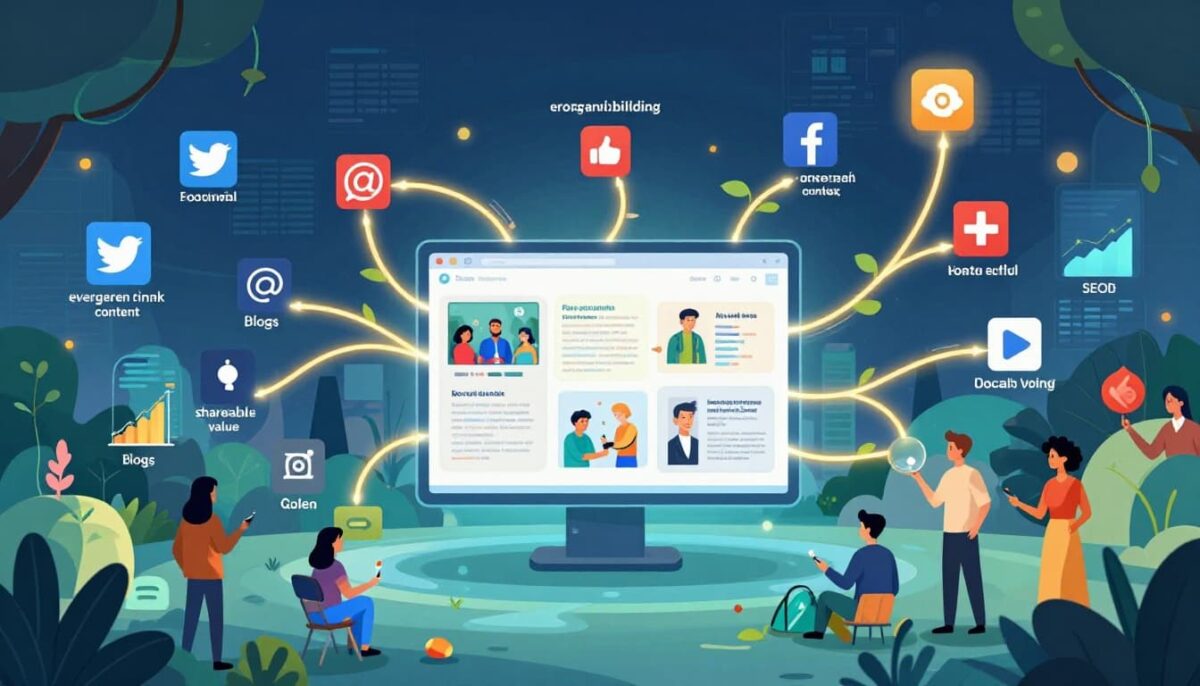
High-Quality, Evergreen Content
Well-written, thoroughly researched content remains the foundation of passive link building. These forms of content tend to be evergreen:
- In-depth guides
- Tutorials (how-to pages)
- Explainers (answering questions in detail and with expertise)
- Reference articles
These remain relevant long after publication and naturally attract citations because they aren’t particularly beholden to shifting trends.
The key is to publish content that can be used by adjacent niches.
For example, if your site’s niche is Android mobile game troubleshooting, create a comprehensive case study of how a VPN can affect online games’ latency and privacy. This kind of crossover content automatically makes it relevant to mobile gaming and VPN audiences while maintaining topical relevance and expanding reach.
Original Research and Unique Insights
Niche sites are also well-suited to these kinds of articles. They have less competition and can provide specific data points or detailed insights into their area of expertise.
These can fill knowledge gaps and serve as a go-to reference for related content on larger topics.
Practical Tools and Resources
Aside from content, niche sites can also provide specific tools:
- Templates
- Checklists
- Case studies
- Specialized data
- Quick-reference guides
After all, in highly focused industries, tailor-made tools are limited, and even simple resources can earn consistent backlinks.
Prioritize relevance always. Tools should directly serve your audience’s needs rather than aim for broad appeal. That is always the power of a niche.
Strong On-Site SEO and User Experience
Whether it’s a small site or a large site, a general site, passive links only happen if people can find your content.
Clean site structure, fast load times, mobile optimization, and clear formatting- all of these greatly improve discoverability.
Pages that are easy to navigate and read feel safer to link to, especially for professional publishers.
Common Misunderstandings
- Don’t blindly publish content and walk away. Remember, it all hinges on the quality of your content. And even the most evergreen of content may need periodic updates.
- Don’t expect immediate results either. Passive link building is a long-term play, and passive links tend to be stronger and longer-lasting than those gained through short-term tactics.
- Don’t chase topics outside your core expertise. Establishing topical authority is one of the main points of passive link building.
Conclusion: Passive Link Building
The fundamentals of SEO don’t change, even for a niche site. If the content is good, it will rank and earn links.
And while passive link building can be tricky and uncertain, it remains the main way to ensure your niche site stays truly relevant. Are you practicing passive link building on your blog or website today? I’d love to hear about it in the comments below.
Updated my passive link-building guide + free planner!
Frequently Asked Questions About Passive Link Building for Niche Blogs and Websites
Passive link building means earning backlinks naturally when other sites reference your helpful content, without sending outreach emails. You create valuable resources that people in your niche want to cite, and then make them easy to find through search, social, and community channels.
Practical, reference-style content works best: in-depth guides, checklists, templates, original research, calculators, case studies, comparisons, and resource roundups. The key is to create something other writers wish existed when they’re writing their own posts.
Most niche blogs won’t see meaningful passive links overnight. It usually takes 3–6+ months to see consistent results. You need time for indexing, ranking, and discovery. The good news? Once a strong asset starts earning links, it can continue doing so for months or years with occasional updates.
Not constantly, but light promotion helps. Share your resource with your email list, inspire, answer questions in relevant communities, and let experts featured in your content know. This supports discovery without turning it into heavy outreach.
Look for new referring domains, increased referral traffic, better rankings for the asset, and mentions (even without links). If pages are getting traffic but have few links, focus on making the content easier to cite.
It’s very effective in the long term, but many successful niche sites use a mix. Strong assets reduce the need for constant outreach, while light, active tactics can accelerate initial results.
Yes, it’s often ideal. Focus on one high-quality asset at a time rather than many thin posts. Build a foundation of related content first, then promote lightly.
Avoid buying links to manipulate rankings, using link farms, automated spam, or excessive exchanges. Google search focuses on genuine value and editorial links. Passive doesn’t mean “risk-free” if you use manipulative tactics.
Track referring domains, referral traffic, organic impressions/clicks in Google Search Console, and any leads or sales. Quality and relevance matter more than sheer quantity.
Disclosure: This Inspire To Thrive blog post contains affiliate links. I may earn a commission from qualifying purchases at no extra cost to you. Some sections were drafted with AI tools and carefully reviewed/edited by me.

- Find Broken Links on Site Fast: Scan, Fix, and Protect Your SEO - October 15, 2026
- 8 Best AI Ranking & Visibility Tracking Tools for Bloggers (2026) - October 15, 2026
- Link Whisper Review: Best Plugin To Boost Your Internal Links - October 14, 2026
Enjoy this content? Help me show up more often in Google by adding Inspire To Thrive as a Preferred Source: