
Trying to stand out on social media gets harder every year. That’s where Social Data Analytics steps in, changing the way you spot trends and track what your audience really wants. It’s key for understanding not just the raw numbers, but also the “why” behind every like, share, and click.
If you’re a social media marketer, learning how to read this data isn’t just smart; it’s become a must. You’ll turn social feedback into strategic insights, helping you improve results, cut wasted time, and boost engagement.
At Inspire To Thrive, you get advice shaped by decades of hands-on experience in both traditional and digital marketing. The goal is clear: give you the tools and knowledge you need to grow your online presence with confidence.
Estimated reading time: 8 minutes
Table of Contents
What is Social Data Analytics and Why Does It Matter?
Peeking behind the curtain of your favorite social media platform isn’t just for tech wizards or data scientists anymore. Social Data Analytics gives you a clear picture of what’s happening every time someone likes, comments, or mentions your brand.
By understanding these numbers, you move from guessing to knowing exactly what works and what needs a tweak.
If you want your marketing strategy to click with your audience, you can’t afford to ignore this.
Defining Social Data Analytics
Social Data Analytics means collecting and analyzing data from social media platforms to spot trends, measure engagement, and track brand health. Think of it as taking the social media chatter and turning it into clear answers you can use to shape your strategy.
What sets it apart from other analytics? It isn’t just about counting followers or tracking likes. You get a deeper look at how real people interact, what they talk about, and how they feel about your brand.
Ready to see what your numbers reveal? Social media analytics is one of the best ways to gauge your performance. It will ensure that your marketing efforts are successful.
Key Metrics Every Social Media Marketer Should Know
You don’t need every number in the book for social media data analytics; focus only on the right ones. The main metrics that make a difference include:
- Engagement Rate: Tracks likes, shares, and comments as a percentage of followers. Shows which content gets a reaction.
- Impressions and Reach: Impressions count how many times your content was shown. Reach tells you how many unique users saw it.
- Sentiment Analysis: Measures if mentions are positive, negative, or neutral. Great for tracking brand mood during campaigns.
- Share of Voice: Shows how much of the conversation your brand owns compared to competitors.
- Click-Through Rate (CTR): Tells you how many people click a link in your post versus how many saw it.
Focus on these stats to find out what sparks real interest and what gets ignored.
Ready to see what your numbers reveal? Social media analytics is one of the best ways to gauge your performance. It will ensure that your marketing efforts are successful.
Identifying and Monitoring Key Performance Indicators
Before you dig into your social media data, decide which numbers actually matter. Choose KPIs that line up with your overall business goals, whether that’s brand awareness, lead generation, or sales.
Focusing on the right metrics keeps you from drowning in data and helps you see what’s really moving the needle. Once those KPIs are clear, picking the right analytics tools becomes much easier.
With the right indicators in place, you can quickly spot which platforms and content types perform best for your audience, and prove the ROI of your social efforts.
Target Content Based On Interests
Social media analytics will offer information on the kind of content and marketing initiatives that are most likely to generate the most buzz. This will drive interest in the digital sphere.
With this information, businesses are better positioned to determine the appropriate content style to publish. Influencers and other key figures are also key to a successful digital marketing campaign.
Monitor Your Social Data Analytics
As a result, you have to regularly monitor all of the pertinent data related to the online actions of your business. Language, tone, sentiment, and keywords are some of the major factors that may be used.
They are used to assess actual perception vs. the intended brand perception. Other crucial elements include the brand itself.
Numbers alone don’t tell the whole story. Social Data Analytics digs deeper with sentiment analysis, helping you “read the room” at scale.
- Measure the tone behind mentions, comments, and reviews.
- Respond to negative feedback quickly to protect your brand image.
- Celebrate wins and share positive feedback to build trust.
This level of understanding supports genuine relationships with your community.
Target Content Based On Social Media Platforms
Brands can evaluate data and identify indicators. These indicators are specific to each social media platform and align with the identified KPIs.
As a result, marketers need to understand how the performance of certain types of content varies across social media networks.
Users who manage a Facebook business page have access to a tool called Facebook Insights. The insights allow them to analyze many KPIs, including likes, responses, post reach, engagement, and impressions.
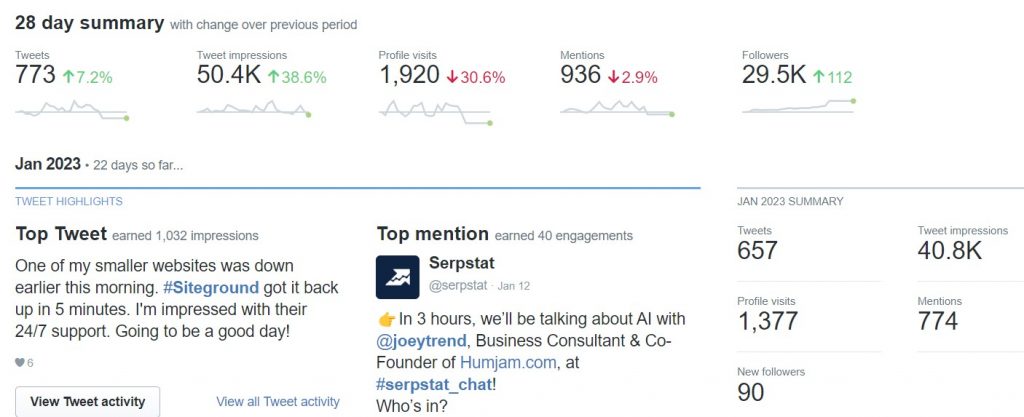
A 28-day summary is available using X Analytics. The analytics can disclose mentions, number of followers, engagement rate, number of link hits, and other statistics.
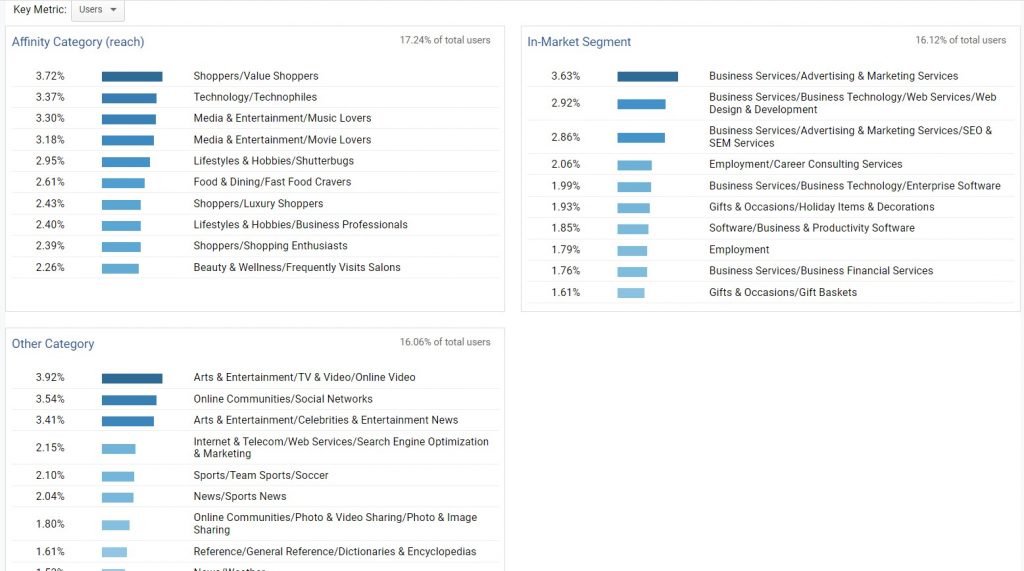
Google Analytics can provide crucial analytics on numerous social media sites. This allows companies to discover more about leads, sales, and visit lengths, among other features.
Clear ROI for Social Media Marketers
In the end, Social Data Analytics makes it possible to show what your efforts achieve—the numbers don’t lie.
- Prove which posts, ads, and campaigns generate leads or sales.
- Justify spending with clear, trackable outcomes.
- Share wins (and learn from misses) with team members and clients.
You’ll know exactly where your time and budget pay off, giving you confidence each time you present results.
Choose the Right Social Data Analytics Tools
The right analytics tool makes everything easier. But with so many options, it can feel like picking a needle out of a haystack. Here’s a rundown of options and what to consider.
Popular Choices:
- Native Tools: All major platforms offer free built-in insights. Facebook Insights, Instagram Analytics, X (Twitter) Analytics, LinkedIn Analytics, and TikTok Insights.
- Third-Party Platforms (Paid and Free):
- Hootsuite: Great for scheduling and unified analytics. Good for teams.
- Sprout Social: Known for detailed reporting and competitor analysis.
- Agorapulse: My all-time favorite to use that sends white-glove reporting to clients on every data point imaginable.
- Brandwatch: Strong in sentiment analysis and trend spotting.
- Google Analytics: Pairs with your website for tracking traffic from social.
- Buffer Analyze: User-friendly and affordable.
- BuzzSumo: Excellent for seeing what content performs best across channels.
- Creator Buddy for X Twitter. This tool shows you the history of an X account and what has worked and what hasn’t, along with future suggestions. The AI used for this tool is real-time.
How to Choose the Best Tool for You:
Think through these factors before diving in:
- Budget: Free tools work for basics; paid solutions offer deeper insights and integrations.
- Features: Make a list of must-haves. Do you need real-time alerts, sentiment scoring, or content recommendations?
- Compatibility: Ensure your tool pulls data from all the platforms you use.
- Ease of Use: If the dashboard looks like rocket science, your team won’t use it.
- Support & Training: Some tools, like Sprout Social and Agorapulse, stand out for customer help and learning resources.
Test a few with free trials before picking your favorite when looking for social media data analytics.
Final Thoughts: Using Social Data Analytics
Social Data Analytics puts a smarter, more actionable marketing strategy in your hands. By listening to what your audience actually says and does, you cut through the noise and create campaigns that connect and convert.
The real wins happen when you move beyond tracking and start making better decisions every day. Don’t let your insights sit idle. Use them to refine your messaging and timing, and stay ahead of the competition.
Ready to put your numbers to work? Inspire To Thrive offers tailored tools and training to help you maximize results.
Disclosure: This Inspire To Thrive blog post contains affiliate links. I may earn a commission from qualifying purchases at no extra cost to you. Some sections were drafted with AI tools and carefully reviewed/edited by me.
Comments are from previous years; the post was fully updated in August 2026

- Website Bounce Rate: What It Means in 2026 (and How to Improve It) - October 26, 2026
- Is It Too Late for Holiday SEO? What Still Works in November - October 25, 2026
- Is Benable Legit? My Honest Benable Review & Earnings Proof - October 24, 2026
Enjoy this content? Help me show up more often in Google by adding Inspire To Thrive as a Preferred Source:



Numbers tell a story.
We need to dig to see what the numbers tell us.
The engagement rate is at the top of your list because users who take some action are the bullseye. Social users tell you what they want with likes, comments and most definitely shares. If someone shares your content it is a less formal endorsement.
Hi Ryan. Yes, I noticed in the Search Console social media numbers that I’m getting more clicks than X, which never showed up in my GA4 reports. It’s pretty wild when numbers from one venue show one thing, and another shows something else. I think sharing is a good metric too – it’s the likes that are less effective to receive than the comments and shares. Thanks for coming by on this one, Ryan. Have a great day.
Hey Lisa!
A great read. People often ignore their social data analytics. They consider social media as the biggest marketing channel, but fail to focus on their analytics to tweak their marketing strategy.
As a content marketer, what impact do you think social media has brought to your blog?
Does it play a pivotal role or a secondary role in marketing your blog?
Hi Ali, thank you. Yes, many do not pay attention to them. It played a bigger role when I first started. Now SEO plays a much bigger role. I also think social media has become so fragmented. Groups on various networks do better than just posting on the main feed. Thanks for coming by Ali and have a great day.