
Plagiarism is a major issue in content marketing. It can cause your entire campaign to fail. Why? Because your audience will quickly realize that you’re not providing them with original, valuable content. They’ll see through the thin veil of copied material, and they won’t stick around for long. That’s why you will need a plagiarism checker.
In fact, plagiarism is one of the most common reasons why people unsubscribe from content marketing campaigns like Email Newsletters.
So, if you want to keep your audience engaged and interested in what you have to say, make sure all your content is original and high quality.
Estimated reading time: 10 minutes
Table of Contents
What Is Plagiarism?
Plagiarism is the wrongful appropriation and publication of another author’s language, thoughts, ideas, or expressions and the representation of them as one’s own original work.
This can be done in a number of ways, including copying word-for-word, paraphrasing without giving credit to the original author, or stealing artwork or photographs.
About Content Marketing
Content marketing is a process of creating and distributing valuable, relevant, and consistent content to attract and retain a clearly defined audience. And, ultimately, to drive profitable customer action.
However, plagiarism can kill your content marketing strategy and bury your business.
How Do Plagiarism Checkers Work?
Plagiarism checkers for bloggers work by scanning the content you input and comparing it to a vast database of existing online material, academic papers, and web pages. Advanced tools now also incorporate AI detection to flag content that may have been generated or heavily edited by tools like ChatGPT.
They highlight specific phrases or sentences that closely match existing content, providing a detailed originality report (usually a percentage score) along with source links. By analyzing word patterns, sentence structures, semantics, and even formatting, these tools help ensure your writing is unique.
This process is crucial for maintaining credibility, avoiding Google penalties for duplicate content, and upholding ethical standards. In 2026, many bloggers will combine traditional plagiarism checks with AI detectors for hybrid content strategies.
Importance of Plagiarism-Free Content in Content Marketing
As a content marketer, you know the importance of original, plagiarism-free content. It is essential for establishing your brand as an expert in your field and driving traffic to your website.
However, producing high-quality content consistently can be challenging.
Plagiarism is a major issue in content marketing. If you are not providing plagiarism-free content, you are putting your business at risk. Plagiarism can lead to:
- a loss of customers
- a loss of revenue
- and a loss of credibility
It is important to ensure that all of your content is original. This means you should use only your own ideas and cite any sources you use.
You should also be careful when using images and videos, as these can also be plagiarized.
How to Know if Your Content Is Plagiarized?
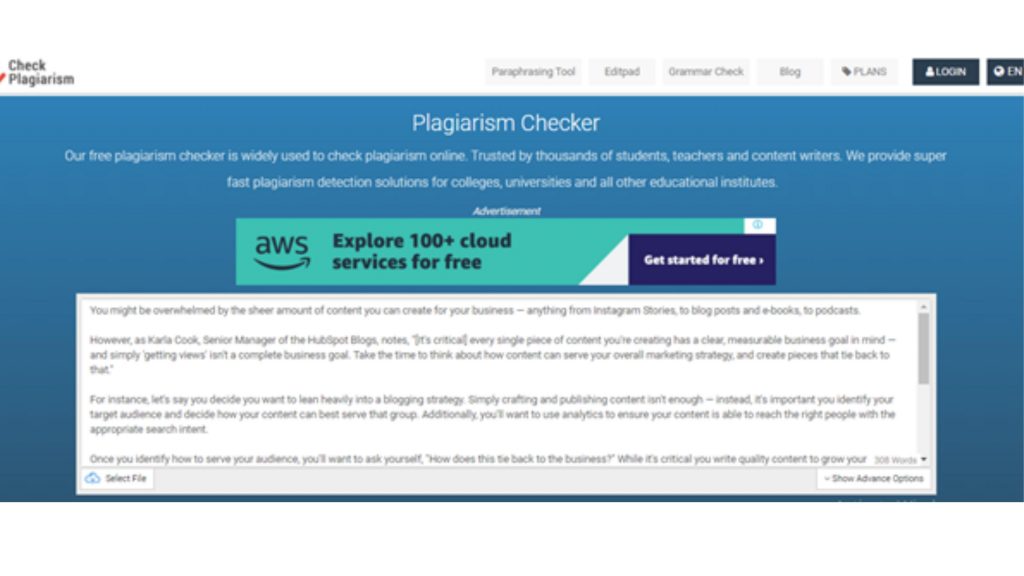
If you are not sure whether your content is plagiarized, the best way to detect it is to use an online plagiarism checker. The Plagiarism checker is an online tool that can easily detect duplicate content in your text, along with the percentage and sources.
This often happens to bloggers whose content is stolen.
Besides plagiarism checkers, there are a few telltale signs that can help you determine if your content has been plagiarized. Here are a few of them:
- Are the sentences and paragraphs too similar to those in another source?
- Is the language used in your content strikingly similar to that in another source?
- Do the facts and figures mentioned in your content match those in other sources?
- Are there any areas where you have copied text verbatim from another source?
How Can Plagiarism Cause Content Marketing Failure?
Plagiarism is a problem that plagues content marketers everywhere. When you plagiarize someone else’s work, you are not only taking away from their effort but also devaluing your own content.
Plagiarism can also get you in trouble with your employer or get your website blacklisted by Google.
Content marketing is one of the most successful ways to promote a business, but it can also fail miserably if it involves plagiarism. This can be done intentionally or unintentionally, but the end result is the same – the loss of credibility for both the plagiarist and the original author.
Plagiarism can cause content marketing failure in a few ways:
1. Legal Penalties
First, if you plagiarize someone else’s work, you’re likely to get caught. When your audience discovers that you’ve been stealing content, they’ll lose trust in you and your brand.
Additionally, plagiarism can actually get you in legal trouble.
2. Copyright Infringement
If you’re caught plagiarizing another person’s work, you could be sued for copyright infringement. This could lead to serious financial penalties and even the closure of your business.
3. Search Engine Rankings
On the other hand, plagiarism can hurt your search engine rankings. Google and other search engines penalize websites that plagiarize content.
4. Loss of Audience
If you are a well-established brand using plagiarized content marketing, it might affect your audience.
For example, you may lose a large number of customers simply because your company is now distrusted, and your marketing is the primary reason for this.
Does Plagiarism Only Include Copying Words For Words?
Most people think of plagiarism as copying someone else’s work word for word and passing it off as their own. But plagiarism can also include stealing ideas, rewriting someone else’s work without giving them credit, and using stock photos or videos without permission.
Any time you borrow someone else’s ideas or words without giving them credit, you’re plagiarizing. And if you’re caught, you could face serious consequences.
Plagiarism remains one of the biggest silent killers of content marketing success.
Whether it’s accidental copying or deliberate duplication, it can tank your rankings, damage your credibility, and waste hours of hard work. That’s exactly why I wrote the original post years ago, and why I’ve now expanded it with the best plagiarism checkers bloggers can use in 2026 to protect and strengthen your content.
Best Plagiarism Checkers for Bloggers in 2026 (Top 8+)
Here’s an updated, expanded list based on reliability, ease of use, and features bloggers need (free tiers, bulk checking, AI detection, etc.):
1. PlagiarismCheckerco: A solid choice for bloggers needing deep, contextual analysis. It scans against billions of web pages and delivers detailed reports. Cloud integration makes it easy to upload docs. Great for catching unintentional duplication before publishing.
2. SmallSEOTools.com Plagiarism Checker is user-friendly with accurate contextual detection. It provides full source URLs in reports and works well for longer blog posts. The free version is generous—ideal for solopreneurs who need to quickly check multiple drafts.
3. DupliChecker.com: Fast and straightforward. It excels at quick scans and at identifying exact or near matches. Time-saving for busy creators who want to focus more on writing than on manual comparisons.
4. PlagiarismDetector.net is free, easy-to-use, and effective for spotting even minor similarities. Cross-platform and user-friendly interface—perfect if you want to avoid penalties and improve SERP rankings.
5. SearchEngineReports.Net: Reliable for comprehensive reports with source links. Helps turn your site into a trusted authority by ensuring originality.
6. Grammarly Plagiarism Checker (New Addition): Integrated into the popular writing tool you may already use. It combines grammar/spelling checks with plagiarism detection and basic AI flagging. Seamless for editing workflows. The free version covers the basics; the premium version unlocks more.
7. Originality.ai is excellent for 2026 bloggers creating AI-assisted content. Strong AI detection + plagiarism scanning. Marketers love its detailed reports and ability to scan large volumes, great for maintaining an authentic voice while scaling output.
8. Quetext or Scribbr (Bonus Free/Paid Options)
- Quetext: Good free tier with deep search and citation assistance.
- Scribbr: Powered by strong databases (often Turnitin-like accuracy). Ideal if you publish research-heavy or in-depth guides.
👉 Pro Tip: Start with free tiers. For high-volume publishing, consider a paid plan with AI detection. Always cross-check important posts manually and add proper attribution and links when building on others’ ideas.
Plagiarism Checkers Comparison Table (2026)
| Tool | Free Tier Limit | AI Detection | Best For | Link |
|---|---|---|---|---|
| PlagiarismChecker.co | Generous | Basic | Contextual deep scans | Check it out |
| SmallSEOTools | Up to 1,000 words | No | Quick blog post checks | Check it out |
| DupliChecker | 25,000+ words | Basic | Fast bulk scanning | Check it out |
| PlagiarismDetector.net | Unlimited (free) | No | Simple & reliable | Check it out |
| SearchEngineReports | Good free limit | No | Detailed source reports | Check it out |
| Grammarly Plagiarism | Limited | Yes | All-in-one writing + checking | Check it out |
| Originality.ai | Limited free | Excellent | AI + plagiarism hybrid content | Check it out |
| Quetext / Scribbr | Varies | Strong | Research-heavy or academic posts | Quetext / Scribbr |
Conclusion: Check for Plagiarism
Plagiarism is a huge problem in content marketing, and it can be tough to spot sometimes. Many people admit to copying and pasting text from the internet without attribution at least once, and many don’t even realize they’re plagiarizing when they do.
The best way to avoid plagiarism is to be aware of its dangers. Always attribute sources, even if you’re just paraphrasing. Use quotation marks around copied text, and make sure to cite your sources if you’re not sure whether something is plagiarism.
Have you experienced plagiarism on your blog or other content marketing materials? Have you used a plagiarism checker tool before? I’d love to hear about it in the comments below.
FAQs: Does Plagiarism Cause Content Marketing to Fail?
Plagiarism in content marketing means copying someone else’s work, ideas, or words and using them as your own without giving credit. This isn’t just about text; images, videos, and even ideas can be plagiarized.
Search engines look for original content. If your site contains plagiarized material, Google and other search engines might penalize it. That means your rankings drop, and fewer people find your business online.
Yes, it can. When readers spot copied content, trust takes a hit. Original work shows you care about your audience, while copied pieces make your brand look lazy or dishonest.
To check for plagiarism, use plagiarism checkers such as Copyscape, Grammarly, or Turnitin. These tools scan your work for matches elsewhere online, helping you spot and fix issues before you publish.
Trust slips away fast. Readers might leave, stop sharing your content, or call your brand out on social platforms. Once lost, audience trust is hard to win back.
It depends. Sharing ideas and building on industry trends is normal, but copying the exact words or frameworks without credit is plagiarism. Always give credit when you use someone else’s work.
Write from your own experience, use your own words, and always credit sources for stats or ideas. When in doubt, link to the original or reach out for approval. Use tools to double-check before publishing.
Check out Lisa Sicard’s blog at Inspire To Thrive. You’ll find plenty of tips on writing, SEO, and smart content creation. There are also tools and blog posts to help you improve your online presence.
Disclosure: This Inspire To Thrive blog post contains affiliate links. I may earn a commission from qualifying purchases at no extra cost to you. Some sections were drafted with AI tools and carefully reviewed/edited by me.
Comments are from previous years; the post was fully updated in June 2026 👇

- Instagram SEO Tips to Help Bloggers Get Discovered - October 12, 2026
- Ground News Pricing: Are Pro, Premium, and Vantage Packages Worth It? - October 11, 2026
- Instagram Repost Feature: What Happens When You Share? - October 11, 2026
Enjoy this content? Help me show up more often in Google by adding Inspire To Thrive as a Preferred Source:


I’ve been plagiarized often over the years. I’ve gone after every one of those folks, and only lost once because I couldn’t identify the country they were in. It’s bothersome, but I deal with it.
When it comes to plagiarizing what someone else has written, if you steal something 100% it’s unethical. Is stealing an idea the same thing… that’s a bit more complicated.
For instance, if you read something and think “I’m going to try that”, then you do and you write about the results, good or bad, it’s more of a review than stealing someone else’s idea; it’s also good taste to share the link to where you got the idea from. Or, you read something and decide you like the topic but either want to build on it or disagree with it, I think that’s also appropriate.
The thing is, on some topics (like blogging), there’s often only so much one can say with originality that hasn’t been said by someone else, even if it’s in a different way. Look at my blog; I’ve written 560 articles on blogging, more when crossed with the topic of writing. Sometimes I’ve stolen from myself with enhancement; I’m not ashamed, and if someone else did that and gave me attribution I wouldn’t be mad at that either. You know my pet peeve is when I read an article on blogging and someone’s using the same exact words that I’ve seen hundreds of times on other blogs, which also irk me to no end.
The concept of creativity isn’t always writing about something no one else has tackled; it’s about writing it in a different way so that it comes across as new. Think about music; these days, almost every single new song sounds like a song we’re already heard before, but with nuances that make it new. It’s not easy if you’re trying to do the right thing, but it’s criminal if you steal directly from someone and say you’re an original.
Hi Mitch, thanks for sharing your experiences here about it. I have no problem if they link back to me. It’s when they don’t that it is not good. However, I believe Google takes care of them as the original content is ranked and the duplicates are NOT ranked. I love your analogy to music Mitch, that makes a lot of sense. A twist on things here and there can make all the difference. Thanks for your input and have a great day.
Hi Lisa,
Plagiarism is a serious concern for someone as a content marketer. I remember Aleyda Solid’s one tweet where a newbie blogger from Bangladesh (I guess) copied the content from her learningseo.io platform as soon as it went up. And let’s be real – people spin content and turn it into a plagiarism-free piece, but I think it doesn’t take them to greater heights.
Rewriting someone’s opinion from a new perspective is a different thing. But yes, running regular Copyscape tests should be a priority. Thinking about this is the need of the hour for creators.
Hi Shyam, I would agree with you on that. Yes, using Copyscape is a great way to cut down on that. I had someone yesterday ask if they could repost one of my posts on their blogs. I didn’t understand why. I said why not rewrite and link to it? Thanks for coming by and have a great day.