You’ve seen the headlines: “Support is collapsing!” or “Record-breaking growth!” backed by a dramatic chart. The numbers are often technically correct, but the story they tell can be misleading.
Statistical bias arises from cherry-picking, framing, baselines, and omitted context, not from broken math. As a content creator or marketer, you need a fast way to check claims before publishing.
In this guide, you’ll learn:
- How tools like Ground News help reveal missing context.
- Common ways numbers mislead (with real examples).
- A practical 7-question checklist you can use in under 60 seconds.
Estimated reading time: 8 minutes
Table of Contents
Key Takeaways of Number Bias
- Bias in numbers usually comes from selection and framing, not faulty math.
- A few quick habits can help you examine claims before publishing.
- Comparison tools like Ground News reveal coverage gaps and missing context.
- Always ask about sources, measurements, and timeframes. Use a simple pre-publish checklist to maintain credibility.
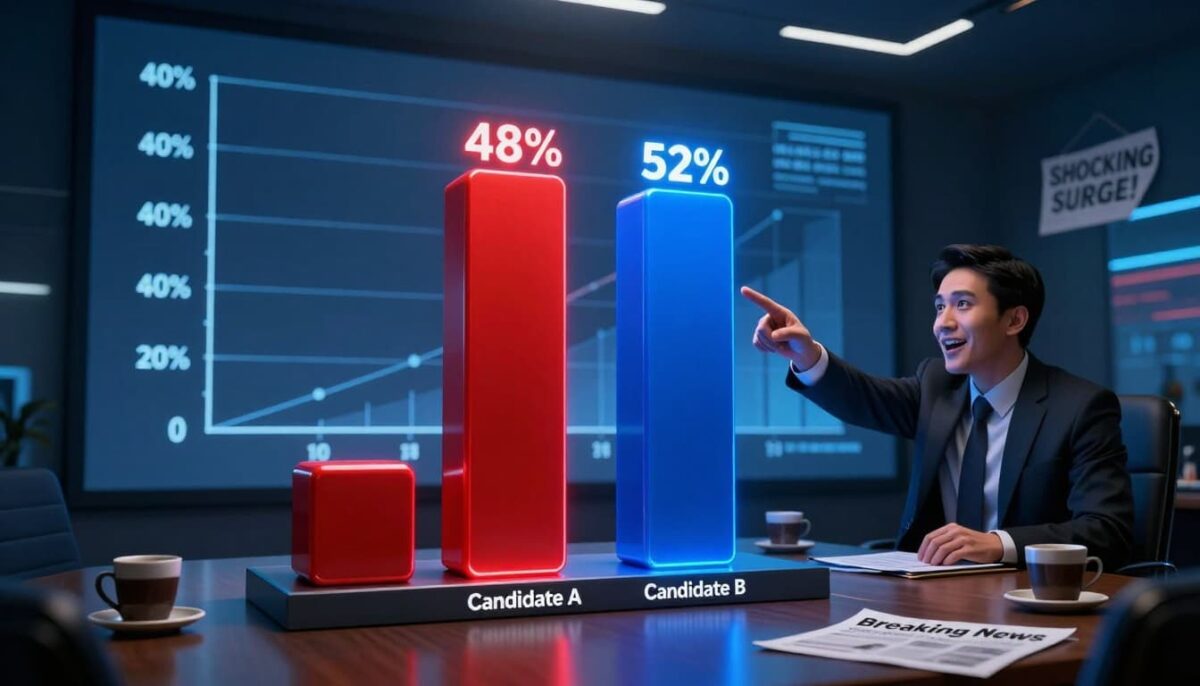
Where statistical bias in Numbers shows up, even when the math is correct
Numbers don’t speak for themselves. People speak for them. A stat is like a photo; it depends on what’s in the frame, what’s cropped out, such as survivorship bias that ignores failed cases, and what the caption suggests you should feel.
Math is only part of the story, since data collection shapes the numbers from the start.
The good news is you don’t need to be a statistician to catch most issues. You just need a few habits that slow you down for 60 seconds to perform basic data analysis.
Cherry-picked timeframes and starting points that change the story
A trend can flip just by picking a different start date, introducing selection bias.
If someone compares this month to an unusually bad month last year, the rebound looks heroic. Or, if they start at a peak, any normal drop looks like a “crash.” If they stopped the chart two months ago, they could skip the part where the line flattens.
When you see a strong claim, ask yourself: why this window? A headline based on “since 2020” can hide that the last 12 months look very different.
Percent vs totals, averages, and other switches that mislead fast
Percent change can look huge when the starting number is tiny, leading to inaccurate results. Going from 2 to 6 is a 200 percent increase, but it’s still just 4 more.
Totals can also hide the real impact. “Total sales rose” can be true even if sales per customer fell, as long as you added more customers. In marketing, this shows up when someone celebrates total signups but ignores churn.
Averages can mislead when a few extreme values pull the number up, while medians can give a better sense of what’s typical. (If one celebrity buys 50 units, the average “customer” did not buy 50 units.)

Who was counted, who was left out, and why that matters in bias in numbers and statistics
- A stat is only as solid as its definition and its sample, where a sample statistic might not reflect the true population parameter.
- A poll might be real but unhelpful if it’s based on a small group, a narrow region, or a specific platform’s users, especially when sampling bias arises, or poll questions are worded to influence results.
- A “study” might sound big, but it actually measures a tiny slice of people or defines the topic in a way that excludes inconvenient cases.
One quick checklist line you can run in your head: who, where, when, and how measured.
Real-World Examples (2025–2026)
- Unemployment headlines highlight a low rate while ignoring declines in labor force participation or underemployment.
- Social media posts claim “200% growth,” starting from a near-zero base.
- Health or economic claims use percentages without absolute numbers or context.
Pro Tip: Always ask, “What would the counter-narrative show?”
| Red Flag | Why It Misleads | Better Approach |
|---|---|---|
| Cherry-picked dates | Ignores bigger trends | Use consistent timeframes |
| Percent vs Absolute | Small base looks huge | Show both % and raw numbers |
| Missing sample size | Tiny poll looks authoritative | Note source and sample size |
| Truncated Y-axis | Mild change looks dramatic | Start the axis at zero when possible |
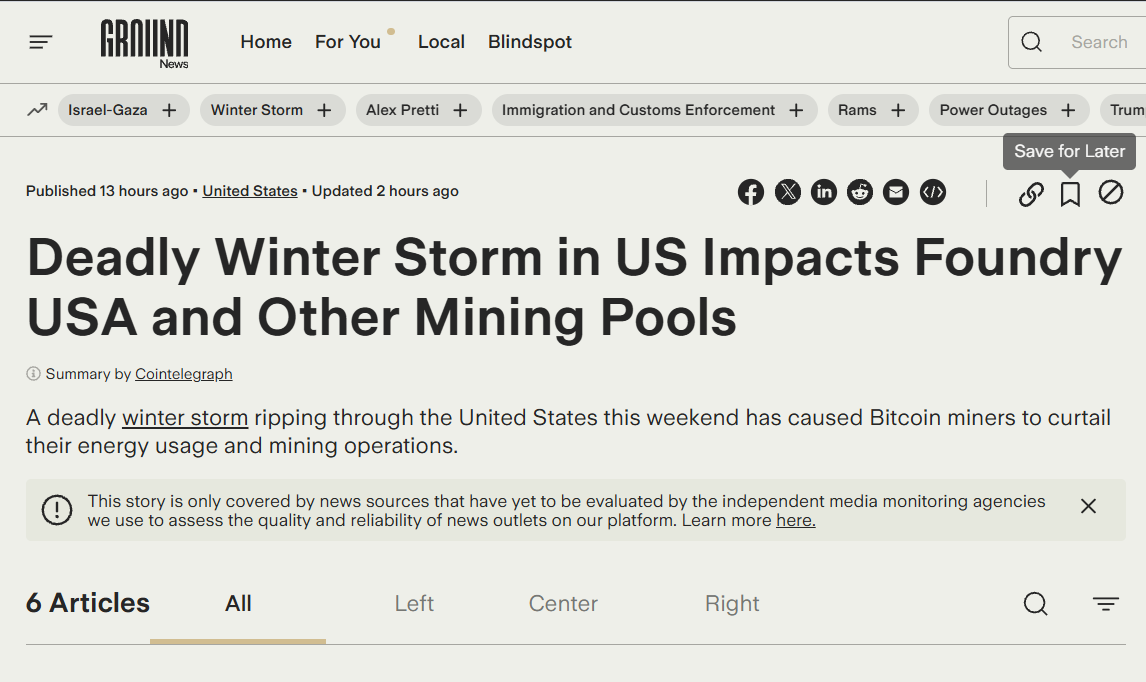
How to use Ground News to Check the Narrative Before You Publish
Ground News is one helpful tool (among others) for quickly comparing coverage.
Start with one claim you want to use. Search for it in Ground News and look at the story cluster from different outlets. Pay attention to:
Bias ratings and ownership info
- Different stats are used for the same issue.
- Different baselines and timeframes.
- What context is missing?
Use the Blindspot feature to see under-covered angles. Read at least one source you wouldn’t normally choose. This helps you catch differences in definitions, exclusions, and emphasis.
When summarizing a number, do this:
- State exactly what the number measures.
- Include the timeframe and baseline for comparison.
- Mention at least one limitation (sample size, definitions, or what’s excluded).
Quick Pre-Publish Checklist (7 Questions)
- What’s the source? Can I link to it?
- What exactly is being measured?
- What’s the timeframe?
- What’s the baseline for comparison?
- Are they totals, per person, or rates?
- How big is the sample?
- What’s left out or excluded?
If the stat only appears in one outlet, the chart has no source, or it relies on emotional wording; slow down and add context.
Conclusion: Bias in Numbers is Real
Statistical bias in numbers is usually about framing and selection, not broken arithmetic. Once you train your eye for timeframes, baselines, samples, and wording, you’ll spot problems faster than you think.
Using Ground News before you publish helps you compare coverage, notice what’s missing, and avoid repeating a stat that only works in one narrative. That protects your credibility, and it makes your research process less stressful.
Pick one post idea you’re working on this week, run the core claim through Ground News, then update your draft with clearer context that reveals the true value and at least one extra viewpoint your audience wouldn’t expect.
(A Pro Ground News plan starts at only .83 per month) Save 40% off the Vantage plan with my affiliate link.
Frequently Asked Questions: Spotting Bias in Numbers and Statistics
Bias in numbers happens when a statistic is technically true but framed to push a conclusion. Common signs include cherry-picked timeframes, missing baselines or comparison groups, and misleading scales or percentages without context. Pause and ask: What’s missing here before you share or use it?
Ground News lets you quickly compare how different outlets cover the same story. It highlights bias ratings and the Blindspot feature to show under-covered angles. When stats are involved, they reveal differences in framing, units, or emphasis, so you know where to dig deeper. (I’ve used it for over five years as an affiliate because it saves time.)
Ask: What’s the source? What’s the denominator and timeframe? Is it absolute numbers, percentages, or rates? What’s the baseline, and who was included or excluded? If you can’t answer several of these easily, add context or trace back to the primary data before using the stat.
Restate the number clearly, add the missing context (unit, baseline, group), and link to the primary source. Include a short “how to read this” note when helpful. This keeps your work transparent and protects your credibility with readers and clients.
They often use different measures, timeframes, or datasets rather than true contradictions. Compare the exact units in Ground News, trace them to the primary source, and report any uncertainty honestly rather than picking one version.
Ground News is fastest for multi-outlet comparison, but you can use AllSides or Ad Fontes for bias charts, Google Dataset Search for raw data, or official government sites. A quick search for the stat plus “primary source” also helps uncover gaps.
Spend 5 to 10 minutes on Ground News after finding a compelling stat, but before drafting. Keep the checklist handy as a bookmark. Over time, it becomes a simple habit that builds trust with your audience.
(I’ve used this app for over 5 years and have been an affiliate as I love the product.)
Disclosure: This Inspire To Thrive blog post contains affiliate links. I may earn a commission from qualifying purchases at no extra cost to you. Some sections were drafted with AI tools and carefully reviewed/edited by me.

- Which Instagram Monitoring App Wins? EyeZy vs Peekviewer - October 20, 2026
- How to Use Social Media for the Best Black Friday Deals of 2026 - October 19, 2026
- How to Identify and Prioritize Your Money Pages (And Why I Just Updated Mine in Link Whisper) - October 19, 2026
Enjoy this content? Help me show up more often in Google by adding Inspire To Thrive as a Preferred Source: