Imagine a follower spotting a familiar profile photo next to a discount or “early access” offer they’ve never seen from you. The account looks close enough that they reply, send a DM, or try to pay. This is social media impersonation in action: someone copies enough of your identity to sell something you never offered, using the trust you’ve already built with your audience.
For anyone who builds relationships on Instagram, Facebook, TikTok, X, or other platforms, a fake account is more than just an annoying copy. Social media impersonation can interrupt real conversations in the comments or DMs, cast doubt on genuine promotions and launches, and leave you answering for claims you never made.
An effective response starts by understanding what actually happened and what your audience may have seen.
Estimated reading time: 9 minutes
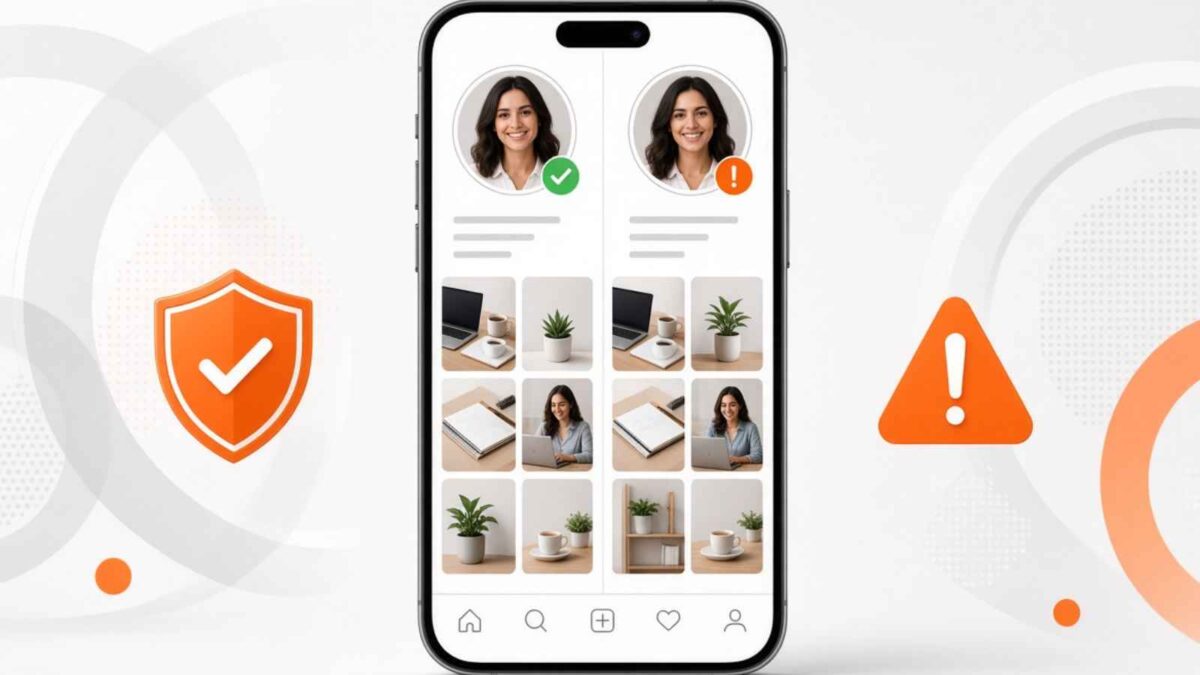
Table of Contents
Key Takeaways on Social Media Impersonation
- Social media impersonation uses a copied profile photo, handle, and branding to sell offers you never made.
- The damage often shows up in comments, DMs, and Stories before it appears in search results.
- Distinguish a pure fake account from possible access to your real account—they require different responses.
- Source removal (the fake account itself) and search cleanup are separate tasks.
- Clear, consistent messaging on your real channels protects the audience relationship while you handle the source.
The Fake Account Is Selling the Trust You Built Through Social Media Impersonation
An impersonator doesn’t need to copy every detail of your profile to confuse people. A familiar profile photo, a similar handle, copied branding, and a few reposted images or Stories are often enough to make an unfamiliar offer look plausible at a glance.
People are especially likely to encounter social media impersonation where they already expect to hear from you: replies under a popular post, comments on a Reel or Story, or direct messages.
Consider a hypothetical creator who announces a new course or product drop. A separate account copies the creator’s identity and messages interested followers with an “early access” or steep discount payment link. The real account never made that offer, yet the fake one benefits from the attention the genuine launch generated.
In the United States, the FTC’s Impersonation Rule makes it illegal to materially and falsely pose as a business or misrepresent affiliation with one in commerce. For small brands and creators, the audience relationship built through consistent social content is exactly what social media impersonation tries to exploit.
Why Social Media Impersonation Damage Can Reach Beyond One Post or DM
The immediate concern may be a customer paying the wrong account or sharing personal information. The consequences of social media impersonation can also spread into ordinary social conversations.
Followers might ask in comments whether a promotion is genuine, hesitate to reply to a legitimate message, or question which account actually represents you. Those questions take time to resolve, especially when you handle marketing and customer support yourself.
Fake Offers Created Through Social Media Impersonation
A fake offer can disrupt a genuine campaign without ever taking over your real account. Imagine a small retailer or creator preparing a seasonal release or course launch, while an imitator advertises steep discounts on products or access that haven’t launched yet.
You may need to reassure buyers in Stories, posts, and DMs while still explaining your actual offer. Not every follower will see your clarification, just as not every follower saw the fake promotion.
The practical task is to identify where confusion is arising (public comments, DMs, Stories, etc.) and address it through the channels your audience already recognizes as yours.
This is why social media impersonation is both a commercial and a reputational issue. Even after a fraudulent pitch is removed, a customer who had a confusing exchange may remain unsure about future messages.
Clear, consistent communication across your real profiles helps protect the relationship without treating every question as a crisis.
First Establish What Has Actually Been Copied or Accessed
A copied identity and a compromised official account can look similar to a customer, but they are different incidents. An independent fake profile may borrow your name, photos, and branding while your genuine accounts remain under your control. If someone has accessed a real account, they may be able to send messages or publish offers from the established profile itself.
The distinction affects how you assess customer exposure and who needs to be involved in the response.
How to Spot Social Media Impersonation Quickly
- The handle is almost identical but has an extra character, underscore, or slight misspelling.
- The account is new or has very low follower/engagement numbers compared to yours.
- It is suddenly promoting discounts, “early access,” giveaways, or payment links you never announced.
- It replies to people in your comments or DMs who just engaged with your real posts.
- The bio, photos, or Stories look copied, but the links or offers don’t match your official ones.
Bot-Driven Social Media Impersonation
Many of the fake accounts that start selling to your audience are not manually run one-offs. Bots and automation make it easy to spin up lookalike profiles, reply to your posts in volume, or send the same “early access” or discount message to dozens of followers at once.
Because the activity can look fast and coordinated, it sometimes feels more legitimate at first glance than a single human-run fake account.
The practical response stays the same: document the accounts and messages, clarify which offers are actually yours on your real channels, and focus removal efforts on the source profiles rather than chasing every automated reply.
Key Facts to Gather When Social Media Impersonation Happens
Start with the facts visible to you so you (or anyone helping you) have a clear picture:
- Which account sent the offer and its exact handle.
- Which name, photos, and branding it used.
- What it asked people to do (click, pay, share info, etc.).
- When customers first reported contact.
- Screenshots of the profile, posts, Stories, and messages.
- Which platforms and places it appeared (comments, DMs, search, etc.).
Keep a record of these details so the issue can be assessed even if a post or DM disappears. Avoid assuming that every unusual message came from the same account; copied material can appear in multiple places or on multiple platforms.
The aim is not to turn you into an investigator. It is to give whoever coordinates the response a reliable picture of the incident so your customer communication stays precise.
Source Removal and Search Cleanup Solve Different Problems
When the imitation sits on a social platform, the fake account, its posts, Stories, and its messages are the source of the problem. Work aimed at removing that account or content addresses the material customers may encounter there.
A search result pointing to the account is a separate surface. Removing a result from a search engine does not delete the underlying profile, and changing what appears in search will not by itself stop messages sent from a live fake account.
The distinction matters because you may first discover the social media impersonation through a search for your name or brand, while customers may encounter it through direct messages or comments. Conversely, an account may no longer be accessible while an outdated search listing continues to cause confusion.
The appropriate work depends on what remains visible and where people are finding it; neither a source takedown nor a search-result change should be described as a complete fix for every copy or repost. Treating them as one vague task called “cleaning up the internet” makes it harder to know what has been resolved and what still needs attention.
When Coordinated Specialist Help Makes Sense for Social Media Impersonation
If an impersonator is contacting customers across accounts or using copied material in several places, a coordinated assessment can help you move beyond reacting to each screenshot separately. ContentRemoval.com provides content removal services for people and businesses dealing with harmful online material.
Founded by Frankie Lee, the company offers a confidential exposure assessment, removal work focused on online sources, and monitoring through its protection plans.
The value of that approach is in defining the scope before choosing where to act. You may know about one imitation because a customer forwarded a message, while other copied profiles or search results require separate attention.
Assessing the identity being misused, the material involved, and the places it appears can help prioritize the source of the false offer rather than treating every visible result as the same problem.
Professional help is most useful when it supports, rather than replaces, accurate communication with your audience.
Removal decisions can depend on the material and the platform, and monitoring cannot prevent every new imitation. You still need a clear account of your official channels and a calm way to answer people who have been approached.
A confidential assessment offers a starting point for deciding which removal work is appropriate.
Frequently Asked Questions About Social Media Impersonation
Social media impersonation is when someone creates a fake account that copies your name, photo, branding, or content in order to contact or sell to your audience.
Carefully compare the handle, check the profile age and follower count, and confirm that the offer matches anything you have actually posted or promoted on your real accounts.
Yes—post a short, calm clarification on your real account (and in Stories) that identifies your official channels and states the offer is not yours. Then handle the removal separately.
Not always. Search results and screenshots can linger, and some customers may remain unsure. That’s why both source removal and clear customer communication matter.
Conclusion
An impersonator is trying to turn an established social audience relationship into a sales opportunity for themselves. The response should protect that relationship: find out what people actually encountered, make your authentic voice easy to recognize across platforms, and address the false material at its source where possible.
Consistent communication, combined with targeted removal, is the most effective way to limit the impact of social media impersonation. Have you had to deal with a fake impersonation recently? I’d love to hear about it in the comments below. 👇
Disclosure: This Inspire To Thrive blog post may contain affiliate links. I may earn a commission from qualifying purchases at no extra cost to you. Some sections were drafted with AI tools and carefully reviewed/edited by me.
Enjoy this content? Help me show up more often in Google by adding Inspire To Thrive as a Preferred Source: