Can people actually find your Facebook page when they need you? Not only on Facebook search, but also on Google and inside new AI tools that scan social content? That is where Facebook SEO comes in.
It means you set up your page and your posts so people can find you in search, on and off Facebook. In 2026, that does not just mean Google. It also means AI search and large language models that read public social signals to decide which brands to trust.
The good news: you do not need to be a tech expert. With a few simple changes, you can make your Facebook page clearer, easier to find, and more useful to real people who want what you offer.
Estimated reading time: 14 minutes
Table of Contents
Key Takeaways
- Facebook SEO helps people find your page on Facebook, Google, and AI tools.
- To improve Facebook SEO, use a clear page name, relevant keywords, and consistent branding across platforms.
- Avoid common mistakes like unclear page names, missing keywords, and infrequent posting to enhance search visibility.
- Regularly engage with your audience by replying to comments and posting consistently for better reach.
- Establish simple weekly habits to maintain and adjust your Facebook SEO according to performance insights.
Do You Actually Have Facebook SEO Working for Your Page Right Now?
Think of this as a quick health check for your Facebook page. You want to know if search tools see your page as the same brand that shows up on your site and other platforms.
If you have a second screen or device nearby, this is the time to use it.
Quick Self-Check: Can People Find Your Page in Search?
Run through this short checklist and answer honestly:
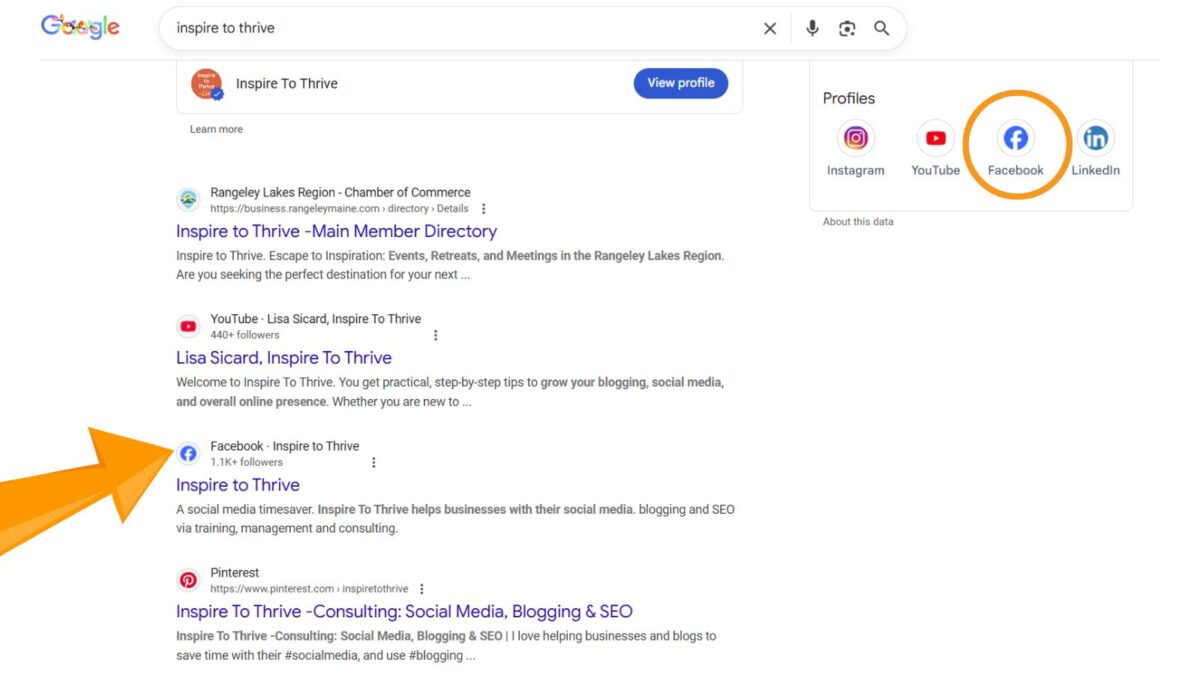
- When you Google your brand or blog name, does your Facebook page show on the first page?
- When you type your brand or blog name into Facebook search, does your page appear at the top?
- If you search your main topic on Facebook (for example, “social media tips” or “vegan recipes”), do any of your posts show?
- Is your page name clear, or would a stranger struggle to know what you do?
- Is your username simple, easy to spell, and close to your brand name?
If you said “no” or “not sure” to several of these, your Facebook SEO needs attention.
Common Facebook SEO Mistakes Brands and Blogs Keep Making
Many pages hide from search without meaning to. Here are the usual problems:
- Clever page name instead of clear brand name: Cute names confuse search tools and people, so your brand does not get matched.
- No keywords in the About section: Facebook and Google see less context, so they skip you for important topics.
- Missing contact info or location: Search tools cannot treat you as a real business, so trust drops.
- Only images with no text: If you never write captions, search engines have nothing to read.
- No captions on Reels or videos: AI and users miss your message, so your content rarely ranks.
- Long gaps in posting: Inactive pages send a weak signal, so your content gets buried.
- Too many hashtags or none at all: Spammy stacks or zero tags both make it harder for algorithms to sort your posts.
Fixing these does not take long, and the payoff can be big.
How to Make Your Facebook Page More SEO Friendly Step by Step
You can tune up your Facebook SEO in an afternoon. Focus on the basics first, then build on them over time.
Strong Facebook SEO helps you show up in Google search, in Facebook search, and inside AI tools that read public posts to answer questions.
Start With a Clear Page Name, URL, and Username That Match Your Brand
Your brand should look like the same “person” everywhere online. That means:
- Use your real brand or blog name as the page name. If you need to change the name read this how-to post.
- Keep your URL and username close to that name, with no random numbers if possible.
- Add one natural keyword if it fits, like “Inspire To Thrive Social Media & SEO”.
- Add your Facebook page to your Google My Business profile to show up better in search.
Consistency makes it easier for Google, Facebook, and LLMs to connect your website, Facebook page, and mentions on other sites. When all those touchpoints line up, search tools trust your content more and show it to the right people.
Optimize Your About Section with Smart Facebook SEO Keywords
Your About section is like a mini home page for your brand. It should be clear, short, and rich in meaning.
Write 2 or 3 short lines that say:
- Who you help
- What you share
- What people can expect
For example: “Inspire To Thrive is a social media timesaver that helps small businesses and bloggers with social media tips, SEO, and blogging help that drives leads.”
Place keywords in:
- The main bio (social media tips, small business marketing, blogging help, Facebook SEO)
- Categories for your page
- Your website URL
- Contact info and location, if you have one
Use the same core phrases you use on your website. That steady pattern across the web makes your topic focus very clear.
Use Captions, Keywords in Every Facebook Post
Text still drives search, even on a busy feed full of photos and video.
For each post:
- Write 2 to 4 short sentences that say what the post covers and who it helps.
- Slip in 1 to 3 main keywords in natural language, like “Facebook SEO tips for local salons”.
- Use 3 to 5 focused hashtags, such as a branded tag (#InspireToThrive) and topic tags like #FacebookSEO or #SocialMediaTips. (This is one I haven’t done much of but will be testing further.)
AI tools, Facebook search, and Google all read captions and even alt text. Clear, human captions help both people and machines understand your content fast.
- Use Inspire To Thrives FREE caption generator tool to create great capations fast! (It’s not just for Instagram.)
Make Your Visuals and Videos Searchable with Text and Structure
Your visuals can work harder for your Facebook SEO too.
For images and videos:
- Put a clear title in the description, close to your main keyword.
- Mention your brand and topic in the first line.
- Turn on captions for spoken content, even if you upload your own.
- Add simple text to thumbnails, like “Facebook SEO checklist” or “Instagram caption tips”.
Use a consistent logo and brand colors so people spot you at a glance. Over time, that visual pattern can also act as a brand signal for AI search systems that scan many sources.
Boost Reach with Engagement Signals That Search Engines Notice
Engagement is like a public review. Comments, shares, saves, and clicks tell Facebook and search engines that your content is worth showing.
To grow real engagement:
- Ask simple questions at the end of posts, like “What has worked for your page this week?”
- Reply to every comment when you can, even if it is short.
- Post at times when your audience is usually active, based on Insights.
- Share key Facebook posts from your blog and invite readers to join the conversation.
- Ask email subscribers to follow your page and react to one helpful post each week.
Bot likes and fake comments hurt you in the long run. Human engagement leads to more reach, better Facebook SEO, and stronger signals for outside search tools.
Simple Facebook SEO Habits You Can Use Every Week
Once the basics are done, keep things moving with a simple routine. Think “light maintenance” instead of heavy tech work.
Create a Light Weekly Checklist for Your Facebook page
Here is a practical checklist you can follow:
- Publish 2 to 4 posts that include clear captions and relevant keywords.
- Share at least one Reel or video with captions and a keyword in the first line.
- Answer all comments and direct messages.
- Update one element on your page, such as a featured post, story highlight, or a line in the About section.
- Glance at Insights to see which topics or phrases got the most reach and clicks.
This does not have to be perfect. The goal is steady signals, week after week.
Review What is Working and Adjust Your Facebook SEO Over Time
Facebook SEO is not a one-time setup. It is a habit.
Use Facebook Insights to see which posts bring the most reach, saves, and link clicks. If your site connects to Google Search Console, check which keywords send traffic when you share posts from your blog.
Then:
- Do more of what works, such as topics or formats that keep showing strong results.
- Drop or adjust what falls flat.
- Test one small change each week, like a new keyword, a stronger hook, or a clearer call to action.
With this slow, steady testing, your Facebook page and your wider search presence grow together.
Conclusion: How To Get Your Facebook SEO Optimized
Facebook SEO is really about being easy to find and easy to understand, for both people and machines. First, clean up your page name, URL, and About section so they match your brand and share the right keywords. Then use clear captions, smart hashtags, and searchable visuals to help every post work harder for you.
Build simple weekly habits, keep an eye on what performs, and adjust as you learn. After a month of small changes, run that quick self-check again and see how much more visible your page feels.
If you want more Facebook SEO and social media tips, follow Inspire To Thrive and explore the guides from Lisa Sicard. For today, pick one area on your Facebook page and update it, before you forget and your next customer scrolls right past.
Smart FAQs About Facebook SEO For Your Brand Or Blog
Facebook SEO focuses on how your content appears and gets found inside Facebook, not on search engines like Google.
You can do a fast check in a few minutes.
•First, search for your brand or blog name on Facebook while logged out or in a private window. If your Page shows up high and looks clear at a glance, you are off to a good start.
•Next, scan your profile image, cover image, and About section. Ask yourself if a stranger would understand what you do and who you help in 5 seconds. If not, tighten up the wording and visuals.
•Then review your last 10 posts. Look for a mix of formats, strong hooks, and at least some posts that earn comments and shares. If every post looks the same and engagement is weak across the board, it is time to refresh your approach.
You know it is working when the right people are finding and engaging with your content without you boosting every post.
•Start by checking a few metrics inside Facebook Insights. Look at reach, engagement rate, link clicks, and Page likes over time. If these grow steadily, your content is getting picked up more often.
•Then look deeper. Are people visiting your website or blog from Facebook? In Google Analytics, check traffic from facebook.com and m.facebook.com. If that traffic stays longer, views more pages, and converts into email signups or sales, your Facebook presence is doing its job.
If reach is flat, link clicks are low, and most traffic comes only when you pay for ads, your Facebook SEO likely needs work.
Think of your Page as your home base on Facebook. Certain areas send strong signals about who you are and who should see you.
•Your Page name and username should be clear, brand focused, and easy to search. Avoid stuffing in extra keywords, just use a simple, recognizable name.
•Your About section should explain what you do, who you help, and where you are, using natural keywords. This helps Facebook match your Page with people who search or browse similar topics.
•Your profile image, cover image, and category also matter. A strong brand logo, a clean cover photo with context, and the right business category help users and the algorithm quickly understand your niche.
•If you run a local business, make sure your address, phone number, and hours are accurate and match what you use on your website and Google Business Profile.
Both matter, they just work a bit differently than on Google.
•Keywords help Facebook understand what your Page and posts are about. Use them naturally in your Page name, About section, services, and post captions. For example, a blogger could include phrases like “blogging tips” or “Pinterest marketing” where it fits.
•Engagement tells Facebook if your content is worth showing to more people. When users like, comment, share, or click, the algorithm sees that as a strong signal.
You get the best results when you combine clear, keyword aware copy with content that people actually want to react to and share.
You do not need to post every hour to see results. Quality and consistency matter more than volume.
•For most bloggers and small businesses, starting with 3 to 7 posts per week works well. That is often enough to stay visible without burning out your audience or yourself.
•Watch your Insights to see when your audience is most active and which posts perform best. If engagement holds steady or improves as you post more, you can test a slightly higher frequency.
•If reach and clicks drop when you post more, you might be overwhelming followers with low impact content. In that case, scale back and focus on fewer, stronger posts.
Links can reduce reach a bit compared to pure engagement posts, because Facebook prefers content that keeps people on the platform. That said, links are still important if you want traffic and leads.
•The key is to make link posts worth clicking and interacting with. Use strong captions, curiosity driven hooks, and an image that stands out in the feed. When people click, comment, and share, Facebook has a reason to push the post further.
•Mix your content types. Use some link posts that send people to your blog, some short text updates, some image posts, and some video or Reels. This mix keeps your Page active and gives Facebook more signals to work with.
If every single post is a hard link to your site with no real value in the caption, your reach can drop and your audience might tune out.
Groups and Reels can both boost your visibility, especially if your Page content is already solid.
•Active posting and engagement in a Facebook Group around your niche can drive people back to your Page or profile. When people interact with you there, Facebook learns who is interested in your content and may show them more of your posts.
•Reels help you reach new users who do not follow you yet. If you create short, useful, or entertaining clips tied to your topic, you increase the chance of being discovered by fresh audiences.
When those new viewers follow your Page, visit your profile, or click through to your website, it supports your broader Facebook SEO efforts.
Several patterns show up again and again.
•Many Pages use clever or vague names that look cute but are hard to search. If someone cannot guess your name when they type into the search bar, they will not find you.
•Some brands ignore the About section or leave it half empty. That space is prime real estate to explain your topic, add location details, and set expectations.
•Others post only promotional content, for example “new post, read now” with no real hook or context. This tends to get weak engagement, which tells Facebook that your content is easy to skip.
•A lot of people also ignore Insights. If you are not checking what actually works, you keep repeating the same low performing content and your reach stays stuck.
You can do a fast check in a few minutes.
•First, search for your brand or blog name on Facebook while logged out or in a private window. If your Page shows up high and looks clear at a glance, you are off to a good start.
•Next, scan your profile image, cover image, and About section. Ask yourself if a stranger would understand what you do and who you help in 5 seconds. If not, tighten up the wording and visuals.
•Then review your last 10 posts. Look for a mix of formats, strong hooks, and at least some posts that earn comments and shares. If every post looks the same and engagement is weak across the board, it is time to refresh your approach.

- How to View Private Instagram Accounts in 2026 (What Actually Works) - September 6, 2026
- UX for SEO in 2026: Why User Experience Still Cannot Be Ignored - September 5, 2026
- Best Platforms to Hire an AI Developer in 2026 - September 5, 2026
Enjoy this content? Help me show up more often in Google by adding Inspire To Thrive as a Preferred Source: