A spike in organic traffic looks exciting, but it doesn’t always tell you the whole story. If you want useful lessons from a blog growth case study, you need to look past the headline numbers.
That’s where many bloggers get stuck with their content marketing. You see charts go up, but you don’t see what caused the jump, how long it took, or whether that traffic turned into email signups and sales.
When you learn to read growth stories the right way, you stop chasing noise and start spotting what works. Long-term success requires a focus on search engine optimization to turn noise into results.
In this Inspire To Thrive blog post, I will show you what I learned running another blog.
From almost zero author branding & video presence → Building a real multi-platform brand
Biggest Wins:
- New YouTube channel (already performing well on rural/dog content)
- AI-generated author photo + dedicated About page
- New Facebook Creator page targeting rural audience
- Updated old posts + new Contact page
- Noticeably improved engagement rate
These changes are very recent — traffic growth is still in the early stages.
In early 2026, I made several important changes to the Rural Area Life blog. Here’s exactly what I changed, why I did it, and the early results I’m seeing.
Estimated reading time: 12 minutes
Table of Contents
Lessons Learned:
- Author branding matters more than most bloggers realize. Adding a real photo, About page, and personal story instantly builds trust and improves engagement.
- YouTube is a powerful traffic engine in 2026. Even a new channel with Shorts and long-form videos can gain traction quickly when you target the right niche (rural/dog content in this case).
- Don’t ignore your old content. Updating existing posts with fresh information and FAQs often gives faster results than publishing new ones.
- Multi-platform presence wins. A blog + YouTube + Facebook Creator page creates a much stronger brand than a blog alone.
- Focus on the foundation first. Trust signals (author bio, contact page, consistent branding) are more important than chasing quick traffic hacks.
- Be patient with results. Real blog growth takes time; these changes are very recent, and traffic is still building.
Bottom line: Sustainable blog growth comes from building a complete brand ecosystem, not just publishing more posts.
A Blog Growth Case Study
Before you trust any growth claim, look at the inputs that came first, including search engine optimization, which forms the foundation of sustainable blog growth.
- How often did you publish?
- What kinds of posts did you create?
- Did you target low-competition topics?
- Perform content audits on older posts?
- Or build topic clusters?
A strong blog growth case study usually follows a pattern. In many cases, growth comes from a few simple moves done well for months.
That might mean tighter keyword targeting, the pillar-cluster model, better internal links, clearer post structure, or more consistent publishing.
| What to check | Why it matters |
|---|---|
| Content volume | Growth often follows steady output |
| Keyword research and competitor analysis | Easier topics can rank faster |
| Site age and domain authority | Older domains with higher authority may move more quickly |
| Promotion channels | Search, email, social, backlink building, and guest blogging work differently |
| Conversion path | Traffic means little without next steps |
This table above helps you avoid a common trap. You don’t want to copy the result while skipping the setup.
Don’t Go For Half The Story
If a case study shows traffic but hides the process, treat it like half the story.
Also, pay attention to time. A jump from 1,000 to 10,000 visits sounds huge.
Yet if it took 18 months, that’s a different lesson than a 60-day sprint. Growth often looks fast in hindsight, but slow while you’re living through it.
Your Blog Growth with Credentials
When I first began the blog, Rural Area Life, I started with no author name, no author bio, and no social media channels. I didn’t want readers of it to be confused with Inspire To Thrive, since they’re totally different niches.
But at the beginning of 2026, I started to think the Rural Area Life blog would be my fun retirement project one day. I began asking Grok AI what I could do to help it grow.
After I had the answers, I did more manual research and learned that having credentials and a face on the blog would help SEO and gain visibility.
Blog Growth Case Study: What I Changed
After doing my research, I came up with ideas of what to change to grow the blog.
- Added a YouTube channel.
- Added my photo (AI-Generated).
- Added an about page.
- Started a Facebook page.
- Added a contact page.
- Updated old posts and added some FAQs.
Rural Area Life Blog: Before vs After (Early 2026 Changes)
| Metric / Area | Before (Early 2026) | After (Current) |
|---|---|---|
| Author Presence | No author name, photo, or bio | ✅ AI-generated author photo + dedicated About page |
| YouTube Channel | Non-existent | ✅ Active channel with Shorts + long-form videos |
| Social Media | No dedicated Facebook page | ✅ New Facebook Creator page (targeting rural audience) |
| Contact & Trust Signals | No clear contact page | ✅ New Contact page added |
| Content Maintenance | Older posts left untouched | ✅ Regular updates + FAQs added |
| Engagement | Not tracked / low | ✅ Noticeably improved engagement rate |
Note: These changes are very recent. Traffic numbers are still growing as we build a stronger foundation.
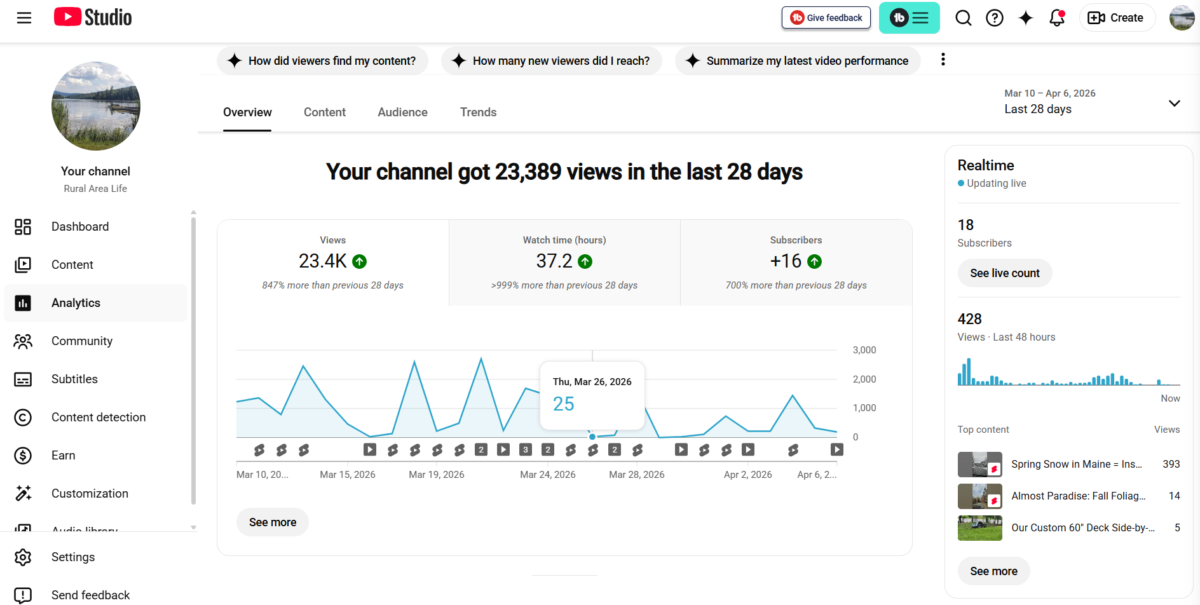
1. YouTube Channel
First, I added a YouTube channel for the blog. I began uploading many videos I had of our rural area and from our rural trips.
I started with shorts, then added some long-form videos to the channel. I used Canva to remove my voice from the videos and added music to most of them. I also used FlexClip to make shorts even quicker from long-form videos.
The results were better than I anticipated. Of course, whenever I share photos or videos of my dog, Stella, she performs well.
2. An Author Bio and Photo
After I added my photo, which is an AI version to not confuse readers with my real one here on Inspire To Thrive, I created an about page.

I changed the photo on Gravatar, so if I comment elsewhere, the correct photo will show up on the Rural Area Life blog and not on my other 2 blogs. I highly recommend that all bloggers use Gravatar, which is free.
3. Adding An About Page
Adding an About Page can help your blog grow faster by giving new visitors a reason to trust you right away. In my case study, a site like Rural Area Benefits benefits because its About Page connects the content to a real person, me, who clearly has experience living in a rural area after moving 6 years ago.
That matters because readers who land on a post about rural life often want to know who’s behind the advice before they subscribe, click a tool, or book help. When your About page explains what you experience and who you help, you make the next step easier.

As a result, you don’t just get traffic; you get better leads and more return visits. A strong About page also supports SEO in a practical way, since it adds:
- Brand context.
- Topical relevance.
- Trust signals that match the rest of your website.
If you want blog growth, don’t treat the About page as filler; use it as a conversion page that supports every post you publish.
4. New Facebook Page
Starting a new Facebook page was the farthest thing from my mind. As you know, Meta has become quite the juggernaut to crack.
But after careful research, I found that in this rural life niche, Facebook was the place to be.
Rural audiences (especially in the US, including places like Maine) use Facebook heavily. It’s one of the top platforms for rural residents, alongside YouTube, for community, local feel, and practical lifestyle content.
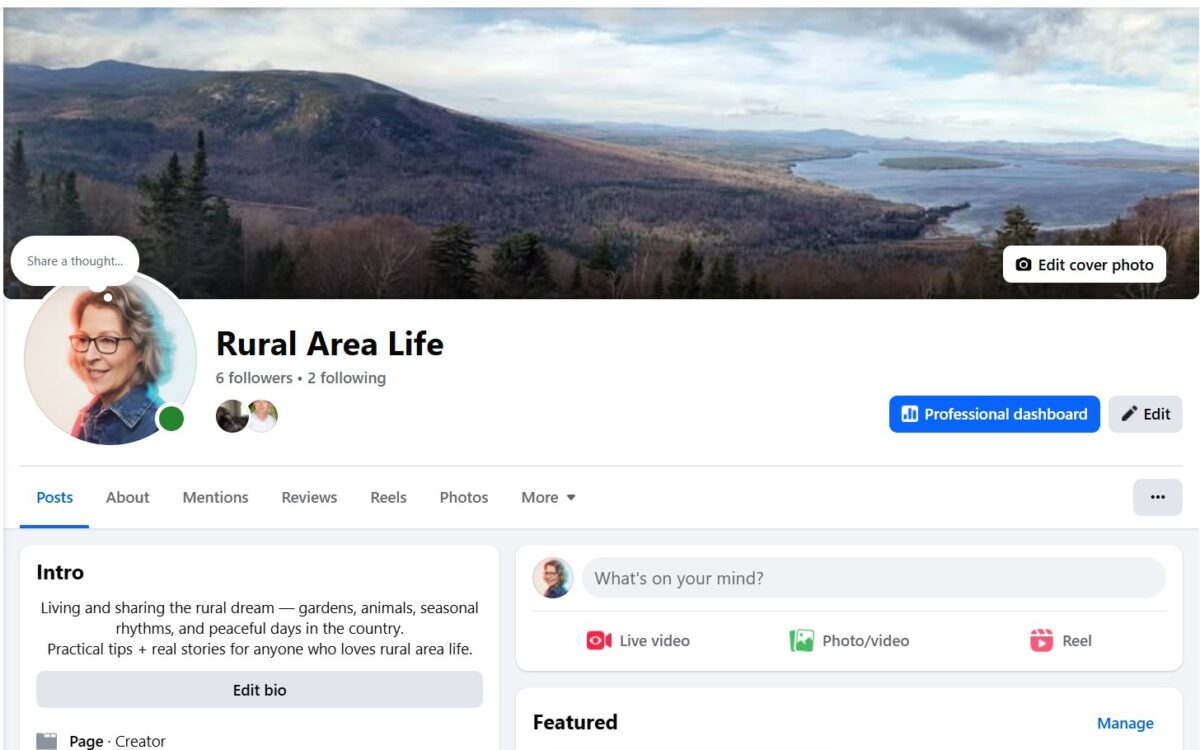
The Facebook page is only 2 weeks old and running. As you can see above, I used the Creator page.
Follow the Rural Area Life Facebook Page here.
A creator page is tailored for content creators, lifestyle pages, influencers, and community builders. It emphasizes organic reach, engagement, community features, and creator monetization (like bonuses, stars, or in-stream ads for eligible pages).
Stay tuned as I try different things on this new Facebook page!
5. Contact Page
When you add a clear contact page, you make it easier for readers, brands, and leads to reach you, and that can support blog growth in a real way. In this case study, you can show how a single page helped convert casual traffic into direct inquiries, service requests, and stronger trust signals.
As a result, your blog doesn’t just attract visitors; it also starts creating more business opportunities, like the one I mentioned in the video.
6. Update Old Blog Posts: An Ongoing Job
If you’ve followed me for a while, you already know I refresh my blog posts often. It’s a lot like housework, because the job is never really done, especially in any blog growth case study.
The best way to update old blog posts for greater blog growth is to improve what already has traction, not just change the date and hit republish. First, check Google Search Console and your analytics to find posts with solid impressions but slipping rankings, or with steady traffic that could do better.
Then tighten the search intent, update outdated facts, add missing keywords naturally, and rewrite weak sections so the post answers the topic more effectively and faster. You should also improve the title, meta description, headings, internal links, and calls to action, because a better structure helps both readers and search engines.
In addition, update images/videos, add newer examples from platforms like Instagram, X, Pinterest, or YouTube when they fit, and remove anything that no longer helps the reader.
Most importantly, make the post more useful than it was before, because that’s what drives longer visits, more shares, stronger rankings, and real blog growth.
The Content Patterns That Usually Drive Early Growth
Most blogs don’t grow because every post wins. You grow because a few posts hit the right search intent, and then pull the rest of the site along.
That means your best move is often simpler than you think. Instead of chasing broad topics, target search intent with long-tail keywords that match clear needs. A post that answers a single, specific problem can outperform a flashy article that tries to cover everything.
For example, if your audience is bloggers, “how to write better blog intros” can beat “blog writing tips.” The first topic has a sharper purpose. The reader knows what they want, and you can meet that need fast.
- The blogger targets specific topics with clear search intent.
- They update older posts instead of only publishing new ones.
- They repurpose content across formats and channels.
- They connect related articles with internal links.
Habits Work for Greater Blog Growth
Those habits work because they build momentum. One post ranks, then another supports it, and then the site becomes easier for both readers and search engines to understand.
Think of it like stacking bricks. A single brick does little. A wall changes the shape of the room.
You should also watch for conversion intent inside the content. Did the blogger add email opt-ins, lead magnets, or service links to generate leads and build an email list? If not, traffic may rise while business results stay flat.
That’s why “more visits” isn’t the full goal. You want the right readers landing on the right post, then taking a useful next step. In other words, growth should have direction, not only speed.
How to Read the Numbers Without Fooling Yourself
In content marketing, numbers can guide you, but they can also flatter you. A solid case study shows both wins and limits.
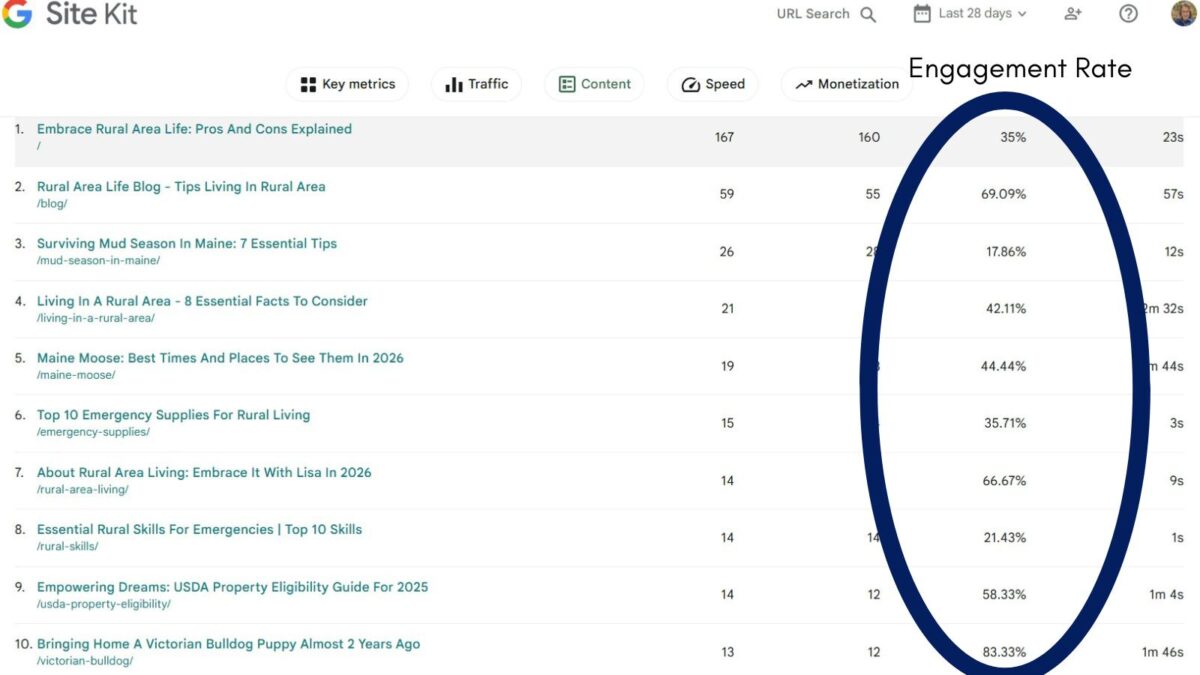
First, separate traffic quality, particularly user engagement from organic traffic, from traffic volume. Ten thousand monthly pageviews from weak topics can generate less business value than 1,000 visits from buyers, subscribers, or loyal readers, especially when contrasted with monthly recurring revenue.
If a case study doesn’t mention inbound leads, conversion rate, outbound clicks, time on page, or other conversions, you should stay cautious.
Below are the engagement rate stats for Rural Area Blog over 28 days.
Blog Growth Case Study Conclusion
A better case study shows what lasted, such as sustained user engagement driven by organic traffic. Did traffic hold for three months? Did the top pages stay stable? Did the blogger build a repeatable system? That’s where the real lesson lives.
The best growth metric is one you can repeat, not one you can screenshot once.
Finally, bring it back to your own blog. If your site is smaller, newer, or in a tighter niche, your path may look different. Still, the core filter stays the same. Look for patterns you can test, not numbers you can envy.
A good blog growth case study should leave you with a plan. It should help you say, “I can try that this month,” not “I guess I need luck.”
You don’t need a giant team or a viral hit. You need a clear topic, steady publishing, and content that leads somewhere useful.
The chart isn’t the lesson; the system is. Start reviewing your own blog with that lens, and you’ll spot your next growth move faster.
Frequently Asked Questions about the Blog Growth Case Study
Start with the inputs, not just the traffic chart. Look at publishing frequency, keyword targeting, content audits, site age, and social media channels. These details reveal the real process behind the numbers.
Target specific topics with clear search intent, update older posts, repurpose across channels, and use internal links to connect content. These habits build momentum, making your site easier for readers and search engines to navigate. They turn individual posts into a supportive system.
Separate traffic quality and conversions from volume—check engagement, inbound leads, channel mix, and sustainability. Watch for seasonal spikes or one-offs that don’t repeat. Focus on metrics you can build into a repeatable system.
Traffic without direction means little for business results. Prioritize the right readers taking useful next steps, like email signups or sales. Growth should have purpose, combining speed with quality and conversions.
Disclosure: This Inspire To Thrive blog post contains affiliate links. I may earn a commission from qualifying purchases at no extra cost to you. Some sections were drafted with AI tools and carefully reviewed/edited by me.

- Instagram Tools Aren’t One-Size-Fits-All: Match the Tool to the Job - September 30, 2026
- Porn on X (Twitter): What’s Allowed and How to Block It - September 29, 2026
- Dolphin Radar Review 2026: Instagram Follower Tracker (What I Saw After 2 Weeks) - September 29, 2026
Enjoy this content? Help me show up more often in Google by adding Inspire To Thrive as a Preferred Source: