In every rhetorical situation, your words do more than fill a page. They sell your ideas, your services, and your expertise. When your grammar is clean and your writing style is clear, readers trust you thanks to your strong grammar, stay longer, and are more likely to click through to your social media or SEO services.
Small slips, like spelling errors, punctuation mistakes, or clunky sentences, pull attention away from your message and can even hurt your search performance. This is especially true when you use blog posts to promote social media management, SEO help, or consulting.
Let’s walk through the most common problems in blogging, including the rules of grammar, and simple ways to fix them fast.
Estimated reading time: 7 minutes
Table of Contents
Key Takeaways
- Strong grammar and writing style enhance trust and SEO performance in blogging.
- Common mistakes include spelling errors, confusing word pairs, and run-on sentences, which can undermine content quality.
- Shorten paragraphs, use clear headings, and adjust tone for readability and reader connection.
- Implement quick editing habits like spell checks and create a personal style guide to improve consistency.
- Focus on improving small grammar and writing style issues to increase trust and support your services.
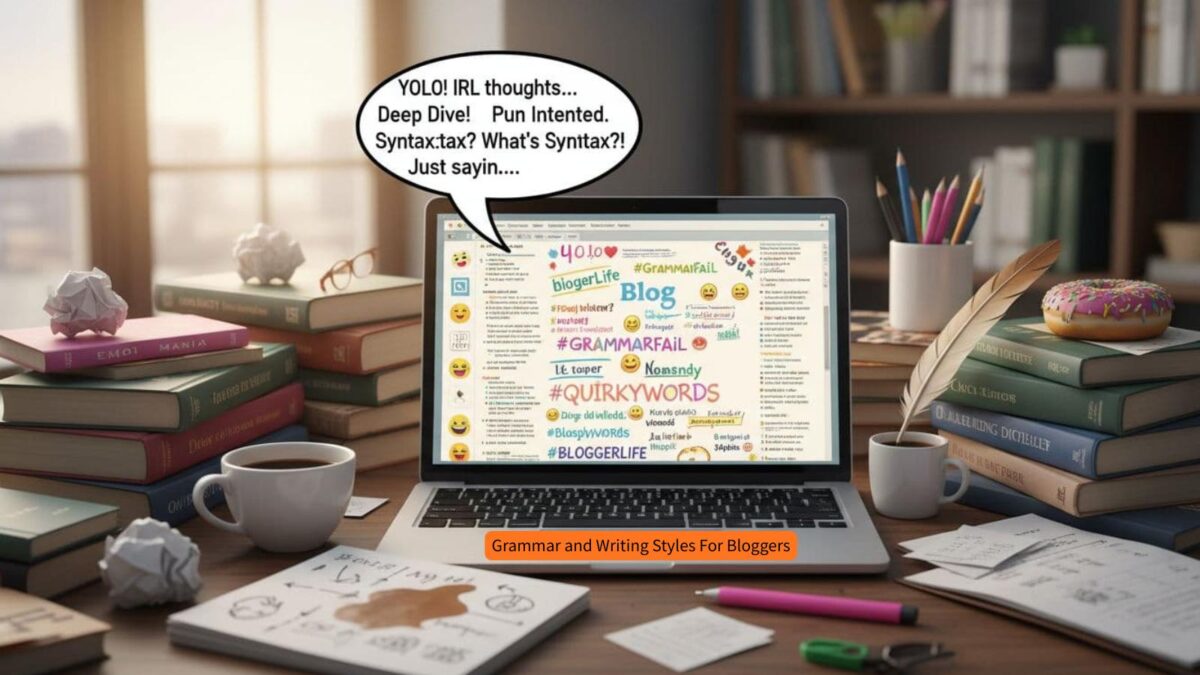
Common Grammar Mistakes That Make Your Blog Look Unprofessional
Think of this section as a quick checklist you can run through before you hit publish. Many writers write fast, skip editing, and end up with tiny grammar mistakes that make strong content look weaker than it is.
Readers may forgive a small typo. But repeat errors suggest the blog is rushed or low effort. That can make a helpful SEO or marketing guide feel less trustworthy, even if the advice is solid.
Use this section to spot the most common issues, then build a simple routine to catch them. I love re-checking posts on my mobile device as I always catch something that way rather from my laptop.
Spelling Errors, Typos, and the Extra “g” in Blogging
Spelling mistakes, like writing bloggingg instead of blogging, send an instant signal that the post did not get a final check. One mistake might slip by, but several in a row make readers doubt your attention to detail.
Use tools that are already at your fingertips: built-in spell check in WordPress or Google Docs, browser extensions, or apps like Grammarly.
Scan your titles, headings, and image text first. Those are what people see in search results, social shares, and Pinterest pins, so they need to be clean.
Confusing Word Pairs: Your vs. You’re, Its vs. It’s, There vs. Their
These tiny words do big damage when their usage is wrong:
- your / you’re: Your shows ownership, you’re means you are. Usage errors with these contractions and possessives are common.
- its / it’s: its shows ownership, it’s means it is.
- there / their: there is a place, their shows ownership.
For example: “Your blog is growing” is correct, while “You’re blog is growing” is not. These may seem small, but repeated mixups make expert SEO tips or social media strategies feel less reliable.
Readers may think, “If the basics are sloppy, what about the advanced stuff?” For double-checking complex usage rules, consult resources like Purdue OWL.
Run-on Sentences and Choppy Fragments
A run-on sentence is just a long string of ideas where multiple clauses are jammed together without proper punctuation, creating poor syntax in your sentences. It often features several independent clauses linked by too many commas where periods or conjunctions should appear, along with errors in verbs like tense shifts or subject-verb agreement.
Short fragments can work in blogging for style. For example, one-word lines for emphasis. But too many fragments feel messy and random, disrupting sentence syntax further.
Overuse of passive voice can also contribute to these clunky sentences by burying active verbs.
Quick fix:
- Read your post out loud.
- Check your blog post on a mobile device
- Wherever you naturally pause, consider a period.
- To correct run-ons, break clauses apart with a comma and a conjunction (like “and” or “but”), or use conjunctions properly to join related clauses.
- Break one long sentence into two or three shorter ones so skimmers can follow along without effort.
Writing Style Issues That Hurt Readability and SEO
Once the basic grammar is under control, your writing style starts to carry the weight. Style affects how long people stay, how many posts they read, and whether they click over to a service page or contact form.
Strong grammar, proper usage, and writing style support better user signals, which can help your SEO over time. As this discussion on how grammar matters to bloggers shows, readers notice when writing feels lazy or confusing.
Overly Formal or Robotic Tone That Pushes Readers Away
Blog readers want a human voice, especially on a site that covers social media, content, and SEO. Stiff phrases and poor word choice with lots of jargon can sound like academic writing, not a real person trying to help.
This type of stiff writing hurts clarity and the reader’s connection through rhetorical grammar.
Use simple words and speak directly to the reader. Switch to active voice and cut overly long prepositional phrases so it feels like a one-to-one chat.
Even if you draft with AI, always edit so the post sounds like you, not a robot. Personality builds trust and makes your advice easier to remember.
Walls of Text and Weak Paragraph Structure
Huge blocks of text scare people away, especially on mobile. When every paragraph looks like a brick, readers bounce instead of scroll.
Aim for short paragraphs of 2 to 4 sentences. Use clear headings and subheadings with natural phrases like “grammar and writing style” or “blogging tips” so both readers and search engines understand what each section covers.

Save bullet points or numbered lists for steps, examples, or quick checklists. This works well in:
- How-to posts.
- SEO tutorials.
- Tool roundups.
Inconsistent Voice and Mixed Point of View
Switching from “I” to “we” to “you” without a reason feels confusing. It makes readers wonder who is speaking.
Pick a main editorial style and stick with it, using active voice consistently. For example, a friendly expert talking to one reader, or a small team speaking as “we.” Keep that voice across your blog, email list, and social media captions.
A steady voice makes your brand feel solid, which is key when you offer services like coaching, consulting, or social media management.
Quick Editing Habits to Clean Up Grammar and Writing Style Fast
You do not need a full-time editor to improve your posts. A short routine can lift the quality of every article and help writers create better SEO content for Instagram, X, Pinterest, and your blog.
Think of editing as part of publishing, not an extra step you can skip when you are busy.
Use Simple Checklists and Free Grammar Writing Tools Before You Hit Publish
Keep a small checklist on your desk or in your notes app. For example:
- Run spell check.
- Act like an editor and read titles and headings.
- Scan for your / you’re, its / it’s, there / their; check basic punctuation, especially the comma.
- Cut or split long sentences.
- Check links and calls to action.
Use browser extensions, read-aloud tools, or grammar apps to spot issues. But always do a quick human pass at the end before publishing your blog post.
Create Your Own Grammar and Writing Style Rules and Stick to Them
Make a short personal style guide for your brand, drawing inspiration from resources like Purdue OWL to develop your house style. Decide:
- How you write numbers (3 vs. three).
- Your editorial style for contractions like “you’re” and “don’t,” and how you format subheadings.
- What tone you aim for in every post.
Use the same style in blog posts, email newsletters, and social captions. A consistent style makes your brand feel familiar and trustworthy, which helps turn readers into leads and long-term clients.
Conclusion: Your Grammer and Writing Style Matters
You do not need perfect grammar like in academic writing to succeed with blogging. You do need to follow the basic rules of grammar and a clear writing style that respects your reader’s time and attention.
Small fixes, like checking word pairs or breaking long paragraphs while considering the rhetorical situation, can raise trust, improve SEO signals, and support your services.
Pick one or two habits from this post and apply them to your next article. Then review your latest post with this checklist in mind, update what you can in ten minutes, and see how much stronger your writing already feels.

- Stock Photos vs. Stock AI Photos for Social Media and Blogging - April 4, 2026
- See Who Views Your Instagram Profile: Best Apps & What Actually Works (2026) - April 4, 2026
- How To Pin A Post On X Today: Boost Your Visibility Up - April 3, 2026



Hey Lisa,
Very informative article. Learned alot about how to be good at writing articles. I was confused, what to use between American and British English. Thanks you cleared the doubt.
Regards,
Shubha Tiwari
Hi Shubha, thank you. I’m glad you found it informative. I tend to struggle with the passive voice but Yoast SEO helps me in my posts. Have a great day!
Hi Lisa,
You nailed it.
I naturally don’t fall into the “passive word” trap, and if I do, grammarly do help me out.
And most of the time, I use American English, it’s my natural writing style.
Hi Folajomi, I do at times but Yoast helps me with this and Grammarly works great too for proofreading. Thanks for coming by and have a great weekend.