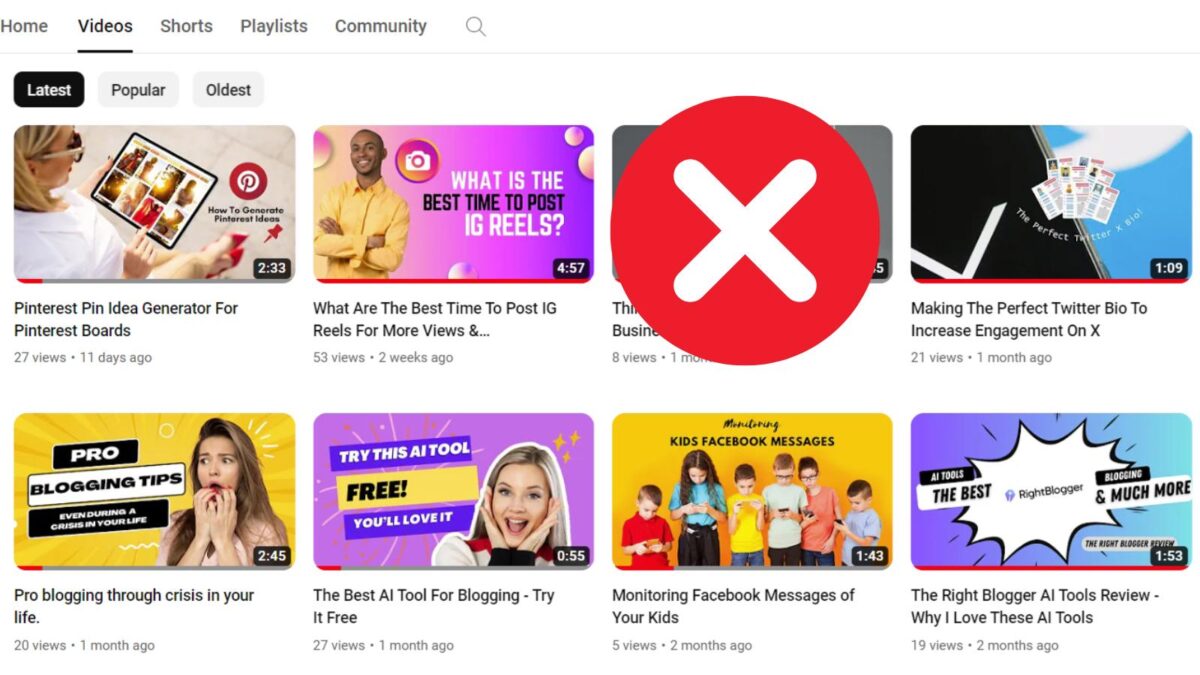
You post a YouTube Shorts video, and it goes viral, getting thousands of views within hours. Then you publish a longer video you’ve been working on all week, and it crawls. If you’re thinking, “Why do my YouTube shorts get more views than my videos?” you’re not alone, and you’re not doing anything “wrong.”
YouTube Shorts and long-form videos are discovered in totally different ways. One is built for fast scrolling and quick wins, the other depends on a viewer choosing you on purpose.
Once you understand how each format is shown to people, you can stop comparing view counts as if they’re the same and start using Shorts as a steady on-ramp to your longer content.
Estimated reading time: 11 minutes
Here’s a real example of a YouTube Short that received significantly more views than my long-form video. Watch how it quickly hooks viewers and funnels them into watching the complete video using smart systems.
Table of Contents
Key Takeaways
- YouTube Shorts often get more views than long-form videos because they’re easier to discover in a swipe feed.
- Shorts attract viewers who prefer quick, engaging content, while long videos require more intentional viewing.
- Shorts can drive high view counts but usually generate less revenue and less deep engagement than long-form videos.
- To leverage Shorts for long-form growth, create paired content that guides viewers from Shorts to related long videos.
- Use clear hooks and maintain consistent topic coverage to effectively convert Shorts viewers into long-form audiences.
Why YouTube Shorts often get more views than long videos (what is really happening)
Shorts are designed to be easy to consume, test, and distribute. YouTube also has a huge incentive to keep people swiping, which means it needs a lot of Shorts to show a lot of viewers.
Shorts vs Long-Form Videos Comparison (2026)
| Aspect | YouTube Shorts | Long-Form Videos | Winner for Growth? |
|---|---|---|---|
| Discovery | Swipe feed (huge reach) | Search + thumbnails | Shorts |
| Watch Time | Very short | Much longer | Long-form |
| Revenue | Lower per view | Higher (ads + longer sessions) | Long-form |
| Algorithm Testing | Extremely fast | Slower | Shorts |
| Best Use | Discovery & funnel | Deep engagement & monetization | Both (together!) |
Use Shorts for fast discovery and long-form videos for real growth and income — the winning strategy in 2026 is pairing both.
For context, Shorts are massive right now. Recent reporting puts YouTube Shorts at 70+ billion daily views, with some sources citing ranges up to 200 billion daily views, and around 2 billion monthly users.
When that many people are in the Shorts feed every day, even a small “slice” of distribution can look like a big spike on your analytics. (If you like tracking the bigger trend, the YouTube Shorts statistics report for 2026 gives a clear snapshot.)

Shorts are built for the swipe feed, so discovery is easier than click-based videos.
Shorts autoplay in an endless feed. That detail changes everything.
A viewer doesn’t need to:
- search a topic
- compare thumbnails
- decide they have 12 minutes to spare
They just swipe, and your Short can appear. If your first or second works, you get “picked” without needing a click.
Long-form works differently. A viewer usually sees your thumbnail on Home, Search, Suggested, or Subscriptions, then makes a choice. Your title, thumbnail, topic timing, and perceived time cost matter together.
That’s a much higher bar than “do I keep watching for two more seconds?”
This is why Shorts often rack up more impressions quickly. YouTube can test them rapidly because the feed removes friction.
The Shorts algorithm tests fast, then spreads fast when retention is strong
Think of Shorts distribution like sampling at a grocery store. YouTube gives your Short to a small group first. If that group reacts well, YouTube offers more samples to more people.
On Shorts, “reacts well” usually looks like:
- viewers don’t swipe away in the first 1 to 3 seconds
- viewers watch most of it, or all of it
- viewers rewatch it (especially if it loops cleanly)
- viewers like, comment, share, or follow up with another view
Retention is the engine. A Short that holds attention can expand quickly because YouTube can keep feeding it into the swipe stream with almost no effort on the viewer’s part.
This also explains the weird feeling of randomness. A small change, like a stronger first line or a clearer on-screen hook, can turn a Short from “dead on arrival” to “still getting views three days later.”
YouTube Shorts views vs long-form views are not equal; here is what the numbers can hide
A YouTube Shorts view and a long-form view can look identical inside your dashboard, but they don’t behave the same in real life.
Shorts often win on reach, but they can lose on depth. That doesn’t mean Shorts are “bad”; it just means you should judge them by the job they’re doing.
YouTube Shorts can bring lots of views, but long videos usually bring more watch time, comments, and income
Shorts can pay very little per 1,000 views compared to long videos. For many creators, Shorts revenue looks like pennies, while long-form can land in dollars, depending on your niche, audience, and ad setup.
Long videos also tend to generate:
- more total watch time per viewer
- more detailed comments
- stronger community signals (people remember you)
It’s like meeting someone at a party versus having coffee with them. Shorts are the quick intro; long-form is the real conversation.
So if your goal is income or deep audience trust, your long videos may be “winning” even when the view count looks smaller.
Why your Shorts viewers do not always click your longer videos (intent and context mismatch)
YouTube Shorts viewers are often in snack mode. Long-form viewers are often in sit-down mode. That mismatch is the main reason your Shorts audience might not move over.
Common examples:
- Your Short is a funny clip; your long video is a 12-minute tutorial. People laughed, but they didn’t ask for a lesson.
- Your Short is a broad trend; your long video is a niche deep. The Short attracts curiosity, but not the right person.
- Your Short is pure payoff (before and after), your long video is mostly process. Viewers wanted the result, not the steps.
YouTube Shorts can attract a colder audience, people who don’t know you yet (as you saw in my above screenshot). If you don’t give them a clear bridge, they’ll keep swiping, even if they liked you.
How to turn YouTube Shorts views into long-form growth (simple fixes that work)
You don’t need complicated tricks. You need a simple system that connects what people liked in the Short to what they’ll get in the longer video.
Make “paired content” so each Short has a clear next video to watch
Pairing means every Short has one obvious next step.
A clean method:
- Make a Short that answers one tiny question (or shows one result).
- Point to the long video for the full process, full list, or full story.
Then make the path easy:
- Pin a comment with the long video link (and say why it’s worth it).
- Use YouTube’s related video features when available.
- Name the long video clearly so it’s easy to find on your channel.
Here’s another powerful example using a different approach. This fun “Go Touch Grass” Short shows how relatable, real-life content can stop the scroll and successfully drive viewers to your longer video.
A practical workflow is to publish one long video, then pull 3 to 5 Shorts from it. Each Short can test a different hook. Your best-performing Short becomes your best “trailer.”
If you want help dialing in format and retention, this breakdown of ideal YouTube Shorts length and structure for retention is useful for setting expectations.
Use hooks, length, and structure that fit Shorts without hurting your brand
Shorts reward clarity and speed. Your brand still matters, but dead time gets punished.
Keep it simple:
- Show the payoff early (or hint at it in the first second).
- Cut setup lines that only make sense in long-form.
- Add captions so it works on mute.
- Keep most Shorts in the 20 to 60-second range if that helps retention (longer can work if every second earns its place).
Also, stay topic-consistent. If your long videos are about home workouts, don’t build a Shorts audience on random memes. You’ll get views, but you’ll struggle to convert them into long-form watchers and subscribers.
Build a YouTube Shorts-to-series funnel that trains viewers to binge your longer videos
One Short can go viral and still do nothing for your channel if it’s disconnected. A simple series change that teaches viewers what to expect next.

A basic funnel that works:
- Short with a strong promise (the problem and the outcome).
- Short follow-up with a quick win (a tip they can use today).
- Long video deep dive (full steps, mistakes to avoid, full demo).
- Build a playlist around that topic so the session continues.
On your long video, use end screens to push the next related video. Your goal is not just a view; it’s a viewing session.
Consistency helps here, too. If viewers see you post a related Short tomorrow, they remember you by, and that makes the long-form click more likely next time.
Conclusion: Why Your YouTube Shorts Get More Views Than Your Videos
Shorts usually get more reach because the swipe feed makes discovery easy, and YouTube can test and spread winners fast. Long videos usually win in terms of depth, watch time, and income, even if the view count looks smaller.
Stop treating your YouTube Shorts views and long-form views like they’re equal points on a scoreboard. Pick the goal that matters most right now (reach, subs, watch time, sales), then use Shorts as the on-ramp that feeds that goal.
Your next step today is simple: choose one long video you’re proud of, create 3 paired Shorts from it, and point every Short to that one next watch.
(This post by Lisa of Inspire To Thrive was written for another blogger who hasn’t tried the YouTube Shorts feature yet and noticed their long-form video views going down.}
Frequently Asked Questions About Why YouTube Shorts Often Outperform Your Long-Form Videos
Shorts are built for quick watching, fast swiping, and repeat plays. That format makes it easier for a single viewer to watch more than one of your clips in a row, which can add up to higher view counts faster than a long-form video that asks for more time.
Shorts also surface in a dedicated Shorts feed, so they can be shown to people who weren’t actively looking for your channel.
Yes. YouTube counts views differently across formats because the viewing experience is different. Shorts are designed for rapid consumption, so a view can happen after a brief watch in the feed, while long-form videos usually depend more on clicks and longer watch sessions.
If you compare them side by side, you can end up judging two different behaviors as if they’re the same thing.
It can. The Shorts feed is a built-in discovery stream where people expect to see creators they don’t know yet. That makes it easier for YouTube to test your Short with new viewers.
Long-form discovery often comes from a mix of sources (Browse, Suggested, Search), and many of those depend more on packaging (title and thumbnail) and session fit.
Long-form usually needs a stronger commitment: a click, a longer watch, and often a quieter moment in someone’s day. Even when your content is solid, the friction is higher.
With Shorts, the viewer is already watching; you just need to keep them from swiping away in the first seconds.
Yes, because Shorts are short by design. A clip can rack up many views while still producing less total watch time than a long video.
That’s why it’s smart to look at format-fit metrics when you review performance, not just raw views.
Shorts can attract quick followers because viewers like the moment you deliver. Long-form can attract fewer subscribers, but they’re often more invested because they spent more time with you.
If you want Shorts viewers to convert, make your channel promise clear in your profile and pin a comment on related long-form content when it makes sense (keep it specific, not salesy).
Not automatically. Shorts and long-form can serve different audience needs, and YouTube treats them as different viewing experiences.
What can hurt is a mismatch: if your Shorts attract viewers who don’t care about your long videos, those viewers may not click when your long-form uploads appear. That doesn’t mean Shorts are “bad”; it means your topics and expectations need tighter alignment.
Start by checking whether Shorts viewers take any next step that matters to you. Look for signs like returning viewers, subscribers who keep watching, and traffic from Shorts to your channel page or long-form videos. A simple gut-check helps too: if you stopped posting Shorts for a month, would your channel still grow the way you want, or are the views mostly “drive-by” attention?
Disclosure: This Inspire To Thrive blog post contains affiliate links. I may earn a commission from qualifying purchases at no extra cost to you. Some sections were drafted with AI tools and carefully reviewed/edited by me.

- Spotify for Creators (Formerly Anchor): Is It Still Worth Using in 2026 - September 3, 2026
- How I Earn Backlinks Without Buying Links in 2026 - September 3, 2026
- Website Images That Actually Help Your Site Rank, Load, and Convert - September 2, 2026
Enjoy this content? Help me show up more often in Google by adding Inspire To Thrive as a Preferred Source: